From Old Calcutta to Modern Kolkata: A Journey Through History & Today’s Weather Forecast
Explore Kolkata’s transformation from old Calcutta to the modern city it is today. This guide covers historical highlights, cultural changes, and the latest weather forecast to help you plan your visit. Kolkata—formerly known as Calcutta—is a city where the old and new coexist with a captivating harmony. From its colonial beginnings to its modern cultural brilliance, Kolkata’s story is one of transformation, resilience, and timeless charm. Yet alongside this rich historical journey, the city experiences a unique and dynamic climate that shapes daily life for millions.
In this detailed 1800-word article, we explore Kolkata’s fascinating history, its evolution into a bustling metropolis, and a complete understanding of today’s weather patterns. This blend of heritage + weather insight gives readers a holistic view of how Kolkata’s past and present are intertwined with its climate.
1. The Birth of Calcutta: A Historic Beginning
The story of Calcutta begins in the late 17th century, when the British East India Company established trading settlements along the eastern banks of the Hooghly River. Before British influence, the area consisted of three small villages: Sutanuti, Gobindapur, and Kalikata. These villages were home to fishermen, weavers, and traders long before the city began to take shape.
How Calcutta Got Its Name
The name “Calcutta” (later anglicized to “Kolkata”) is believed to have come from the village “Kalikata,” which may have roots in:
- the Bengali word “Kali,” referencing Goddess Kali,
- “kalikshetra,” meaning the land of Kali, or
- “khal,” meaning a canal or ditch.
Regardless of its origin, the name signifies the region’s long-standing cultural depth.
Establishment of Fort William
In 1696, the British constructed Fort William, marking the beginning of Calcutta’s transformation into a major colonial hub. This fort later became the center of British military and administrative activities, setting the stage for Calcutta’s rise as a powerful metropolitan center in Asia.
2. Calcutta as the Capital of British India
Between 1772 and 1911, Calcutta served as the capital of British India. During this era, the city experienced monumental changes:
Architectural Growth
The British built remarkable structures that still grace the city’s landscape:
- Victoria Memorial
- Writers’ Building
- St. Paul’s Cathedral
- Howrah Bridge (completed later in 1943)
- Indian Museum
These buildings represent various architectural styles—from Indo-Saracenic to Gothic Revival.
The City of Palaces
Calcutta earned the nickname “City of Palaces” for its grand colonial mansions, wide avenues, and imposing administrative buildings.
Cultural Blossoming
The city also became the epicenter of the Bengal Renaissance, a period marked by advancements in literature, science, education, and art. Legends such as:
- Rabindranath Tagore
- Bankim Chandra Chattopadhyay
- Swami Vivekananda
- Jagadish Chandra Bose
- Satyendranath Bose
rose to worldwide prominence.
This cultural explosion gave Calcutta a legacy that still enriches India’s identity.
3. The Journey Through the Freedom Movement
Calcutta played a crucial role in India’s independence struggle. It served as:
- a hub for revolutionary activities,
- a center of intellectual discussions, and
- a base for several nationalist newspapers.
Movements like the Swadeshi Movement gained momentum here, making the city an influential force in shaping India’s freedom story.
4. Transition to Modern Kolkata
On January 1, 2001, “Calcutta” officially became “Kolkata”, reflecting the Bengali pronunciation and honoring the region’s heritage.
Today, Kolkata is known for:
- its literary culture,
- vibrant festivals like Durga Puja,
- iconic trams and yellow taxis,
- street food such as kathi rolls, phuchka, and mishti doi,
- a strong academic ecosystem,
- intellectual debates in “adda” sessions.
The city beautifully blends modernization with tradition—its malls coexist with old bookstores, skyscrapers rise beside century-old houses, and technology thrives alongside artistic expression.
5. Kolkata’s Climate: Understanding the Weather Through the Year
As Kolkata evolved historically, its climate has remained a major part of its identity. Located near the Bay of Bengal and built along the Hooghly River, the city experiences a tropical wet-and-dry climate, categorized by:
- Hot summers
- Heavy monsoon rains
- Comfortable yet short winters
Let’s explore each season in detail.
1. Summer (March – June)
Kolkata’s summers are hot, humid, and intense.
Typical Weather Patterns
- Day temperatures: 32–40°C
- High humidity: often above 70%
- “Feels-like” temperature: significantly higher
Heat Waves
The region occasionally experiences heatwaves during May and June, raising concerns for health, especially for outdoor workers and commuters.
Influence of Nor’westers
Local thunderstorms called Kalbaisakhi bring relief by:
- lowering temperatures,
- providing short bursts of rain,
- clearing dust from the air.
These evening storms are dramatic and iconic in eastern India.
1. Monsoon (June – September)
Monsoon is the most defining weather season in Kolkata.
Key Features
- Heavy rainfall with high intensity
- Cloudy skies
- Occasional waterlogging
- High humidity
- Temperature drops to: 25–32°C
Why Kolkata Gets Heavy Rain
The Bay of Bengal monsoon current pushes moist air toward the region, resulting in:
- widespread rainfall,
- thunderstorms,
- strong winds,
- prolonged wet spells.
This season impacts:
- transport,
- street markets,
- daily commutes,
- and festivals that fall within these months.
Despite the challenges, monsoon gives Kolkata its poetic charm—rain-soaked streets, tram rides, chai stalls, and vibrant greenery.
- Post-Monsoon (October – November)
After the monsoon, Kolkata enters a pleasant transitional phase.
What to Expect
- Clear skies
- Lower humidity
- Temperature: 22–30°C
- Calmer winds
This is also the time for Durga Puja, when Kolkata transforms with artistic pandals, lights, and cultural celebrations.
- Winter (December – February)
Winter is undoubtedly the best time to experience Kolkata.
Weather Highlights
- Mild cold
- Foggy mornings
- Crisp evenings
- Low humidity
- Temperature: 12–25°C
Winter brings festivals, picnics, literary meets, Christmas at Park Street, and a lively cultural season.
6. How Kolkata’s Weather Affects Daily Life
Kolkata’s weather isn’t just a forecast—it’s a rhythm that influences lifestyle.
Daily Commute
Heavy rains often slow down traffic and impact buses, taxis, and metro routes.
Festivals
- Monsoon affects cultural events like Rath Yatra.
- Winter brings prime festive months.
Food Culture
Seasons shape:
- summer drinks like aam panna and sugarcane juice,
- winter delicacies like nolen gur,
- monsoon favorites like khichuri and ilish machh.
Health
High humidity impacts comfort, while winter brings viral infections and fog-related respiratory worries.
7. Today’s Kolkata Weather Forecast – What to Expect
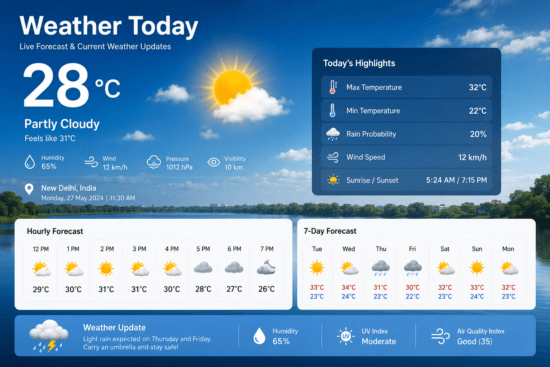
While live weather changes continuously, typical daily patterns look like this:
Morning
- Moderate humidity
- Light breeze
- Temperature around 21–28°C (depending on season)
Afternoon
- Warmer temperatures
- Cloud buildup during monsoon
- Higher humidity levels
Evening
- More comfortable temperatures
- Possible showers during monsoon
- Pleasant winter breeze
Night
- Stable, warm nights during summer
- Cool, crisp nights in winter
This daily cycle helps residents plan commutes, outings, and events better.
8. Weather Forecasting: Why It Matters for Kolkata
Weather forecasting plays a vital role in Kolkata due to:
Flood-Prone Areas
Some neighborhoods experience waterlogging even with moderate rain.
Cyclone Alerts
The Bay of Bengal is known for cyclonic activity. Early warnings help residents stay safe.
Health & Comfort
High humidity affects comfort and productivity levels.
Agriculture
West Bengal’s large agricultural sector depends on monsoon patterns.
Tourism
Weather influences:
- river cruises,
- heritage walks,
- festivals,
- food tours,
- and winter travel.
9. How Technology Helps Deliver Accurate Weather Forecasts
Modern weather forecasting in Kolkata relies on:
- Doppler radar networks
- Satellite imagery
- Real-time humidity & pressure sensors
- Computer-driven climate models
- Data from the Indian Meteorological Department (IMD)
These tools help provide:
- hourly forecasts,
- rainfall predictions,
- heat index measurement,
- air quality monitoring,
- cyclone tracking.
10. Kolkata’s Future: Climate Change & Weather Trends
Climate experts note that Kolkata’s long-term weather patterns are shifting.
Major concerns include:
- Rising average temperatures
- Stronger, more frequent cyclones
- Irregular monsoon patterns
- Increased humidity levels
- Higher flood risks
Adaptation Measures
- improved drainage systems,
- climate-resilient infrastructure,
- clean-energy initiatives,
- urban green coverage—
are all required to protect the city’s future.
Conclusion: Kolkata’s Timeless Journey, Shaped by History & Climate
Kolkata’s journey from Old Calcutta to a modern metropolis is a tale of culture, heritage, transformation, and resilience. The city has witnessed centuries of colonial influence, revolutionary movements, artistic excellence, and technological growth—while its weather continues to shape daily routines and the rhythm of life.
Understanding Kolkata’s history gives depth to its identity, while knowing its weather patterns helps residents and travelers prepare for the day ahead. Together, they paint a complete picture of a city unlike any other—vibrant, emotional, poetic, and endlessly alive.