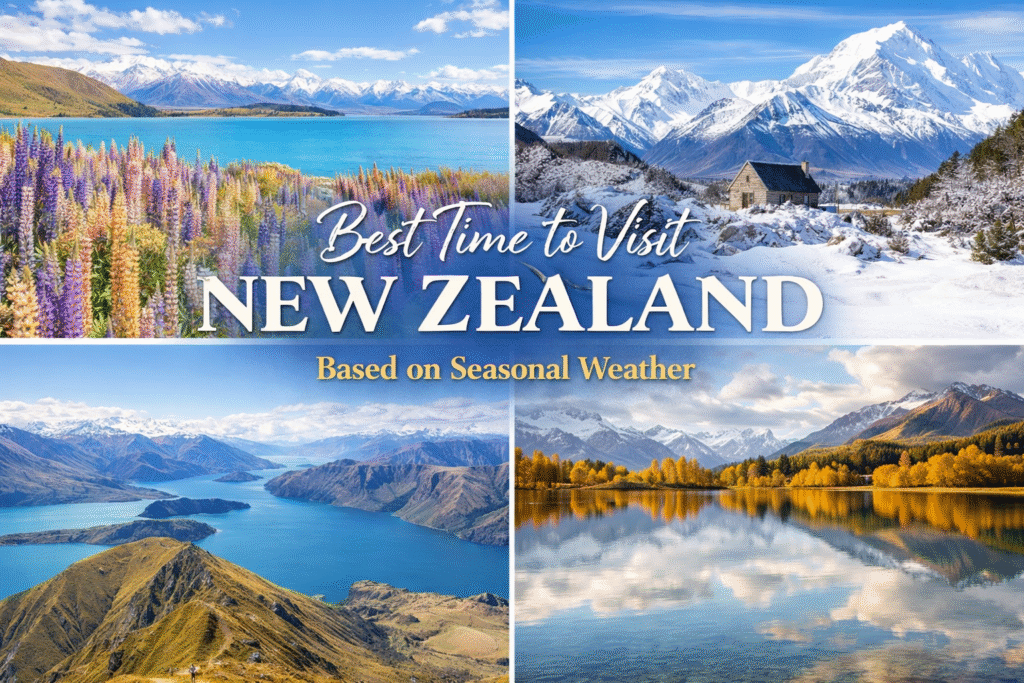
New Zealand is one of the world’s most breathtaking travel destinations, known for its dramatic landscapes, adventure activities, pristine beaches, and vibrant cities. From snow-covered mountains and glaciers to lush forests and coastal cliffs, the country offers diverse scenery throughout the year. Because New Zealand is located in the Southern Hemisphere, its seasons are opposite to those in North America and Europe.
Choosing the best time to visit New Zealand depends largely on the type of activities you want to experience. Each season offers unique weather conditions, landscapes, and travel opportunities. Understanding these seasonal differences will help you plan the perfect trip.
Understanding New Zealand’s Seasons
New Zealand experiences four distinct seasons, each bringing different weather patterns and travel experiences.
Summer: December to February
Autumn: March to May
Winter: June to August
Spring: September to November
The climate varies slightly between the North Island and South Island, with the South Island generally experiencing cooler temperatures and more dramatic seasonal changes.
Summer in New Zealand (December to February)
Summer is the most popular time to visit New Zealand. During these months, the weather is warm, sunny, and perfect for outdoor activities.
Average temperatures typically range between 20°C and 30°C (68°F to 86°F), although coastal areas tend to remain slightly cooler due to ocean breezes. Long daylight hours allow travelers to explore the country’s natural beauty well into the evening.
This is the ideal season for beach visits, hiking, kayaking, and exploring national parks. Destinations like Bay of Islands, Abel Tasman National Park, and the Coromandel Peninsula are especially popular during summer.
Adventure tourism also thrives during this time. Activities such as bungee jumping in Queenstown, glacier tours on the South Island, and scenic road trips are widely enjoyed.
However, summer is also peak tourist season. Accommodation prices are higher, and popular destinations can become crowded. It is recommended to book hotels and tours well in advance.
Best for:
-
Beaches and coastal travel
-
Hiking and outdoor adventures
-
Road trips
-
National park exploration
Autumn in New Zealand (March to May)
Autumn is considered one of the most beautiful times to visit New Zealand. During this season, the landscape transforms with vibrant red, orange, and golden foliage, especially in regions such as Central Otago and Arrowtown.
Temperatures remain mild, usually ranging between 15°C and 25°C (59°F to 77°F), making it comfortable for sightseeing and outdoor activities.
Another advantage of traveling during autumn is the reduced number of tourists compared to summer. Attractions are less crowded, and accommodation prices often become more affordable.
Autumn is also an excellent time for food and wine tourism. Many regions celebrate harvest festivals, and vineyards in places like Marlborough and Hawke’s Bay host wine tastings and events.
Weather during this time is generally stable, although cooler evenings are common.
Best for:
-
Scenic landscapes and photography
-
Wine tours and food festivals
-
Comfortable sightseeing
-
Fewer crowds
Winter in New Zealand (June to August)
Winter brings cooler temperatures and snow to many parts of New Zealand, particularly in the mountainous regions of the South Island.
Temperatures usually range between 5°C and 15°C (41°F to 59°F) depending on the location. While coastal areas remain relatively mild, alpine regions receive significant snowfall.
Winter is the best time to visit New Zealand for skiing and snowboarding. Popular ski resorts such as Queenstown, Wanaka, and Mount Ruapehu attract visitors from around the world.
The snow-covered landscapes also create incredible scenery, especially around the Southern Alps. Travelers can enjoy winter sports, scenic drives, and cozy alpine towns.
Another advantage of winter travel is fewer crowds in major tourist areas, especially in cities like Auckland and Wellington.
However, some hiking trails and mountain roads may be inaccessible due to snow.
Best for:
-
Skiing and snowboarding
-
Snow-covered mountain scenery
-
Budget travel
-
Quiet sightseeing
Spring in New Zealand (September to November)
Spring is a wonderful time to visit New Zealand as the country awakens from winter. Flowers bloom, wildlife becomes more active, and temperatures gradually rise.
Average temperatures range between 10°C and 20°C (50°F to 68°F). While the weather can sometimes be unpredictable with occasional rain showers, sunny days become more frequent as the season progresses.
Spring is particularly beautiful in rural regions where lambs and other newborn animals appear in fields, creating picturesque countryside scenes.
Outdoor activities such as hiking, cycling, and nature walks become more enjoyable again as trails reopen after winter.
Tourist numbers during spring remain moderate, meaning you can explore many destinations without heavy crowds.
Best for:
-
Flower blooms and wildlife
-
Outdoor activities
-
Scenic countryside views
-
Moderate tourist crowds
Best Time for Outdoor Adventures
New Zealand is famous for adventure tourism, and the best time for these activities varies slightly.
Hiking and trekking:
December to March offers the most stable weather and accessible trails.
Skiing and snowboarding:
June to August is the prime winter sports season.
Road trips and scenic drives:
Spring and autumn provide beautiful landscapes and fewer crowds.
Water activities:
Summer offers the warmest temperatures for kayaking, sailing, and beach visits.
Weather Differences Between the North and South Islands
New Zealand’s two main islands experience slightly different climates.
North Island:
Warmer and more subtropical with milder winters. Cities like Auckland and Wellington experience moderate temperatures year-round.
South Island:
Cooler climate with more dramatic seasonal changes. Alpine regions experience snowfall during winter, while summer offers stunning landscapes and clear skies.
Travelers visiting both islands should pack for varying weather conditions.
Best Months to Visit New Zealand
Certain months provide particularly ideal travel conditions.
January and February:
Warm summer weather perfect for beaches and outdoor adventures.
March and April:
Beautiful autumn colors and fewer crowds.
October and November:
Spring blooms and pleasant temperatures for sightseeing.
Each of these periods offers a balance of good weather and enjoyable travel conditions.
Tips for Planning a Trip to New Zealand
To get the most out of your New Zealand trip, consider planning your itinerary around the season.
Book accommodations early if traveling during summer or winter ski season. Weather in New Zealand can change quickly, so packing layers is always recommended.
A road trip is one of the best ways to experience the country. Renting a car or campervan allows you to explore remote landscapes, coastal highways, and scenic mountain routes at your own pace.
Because the country’s natural beauty is spread across both islands, many travelers spend at least two weeks exploring multiple regions.
Final Thoughts
The best time to visit New Zealand depends on what type of travel experience you want. Summer is perfect for beaches, hiking, and outdoor adventures, while winter attracts visitors interested in skiing and alpine landscapes. Autumn offers beautiful foliage and fewer crowds, and spring provides blooming landscapes and mild temperatures.
No matter when you visit, New Zealand’s stunning natural scenery and diverse activities make it an unforgettable destination throughout the year.
Frequently Asked Questions
What is the best month to visit New Zealand?
February and March are often considered the best months due to warm weather, clear skies, and fewer tourists compared to peak summer.
When is the cheapest time to visit New Zealand?
The cheapest months are usually May, June, and September when tourist demand is lower.
Is summer the best season to visit New Zealand?
Summer is the most popular season because of warm weather and ideal conditions for outdoor adventures.
When can you see snow in New Zealand?
Snow is common from June to August, especially in the South Island and mountainous regions.
Is spring a good time to visit New Zealand?
Yes, spring offers beautiful landscapes, blooming flowers, and moderate crowds.
How many days are enough for New Zealand?
Most travelers recommend 10 to 14 days to explore both the North Island and South Island comfortably.