
Weather patterns around the world are influenced by many natural climate systems. One of the most powerful among them is La Niña, a phenomenon that occurs in the Pacific Ocean and significantly affects global weather patterns. From increased rainfall in some regions to droughts in others, La Niña can influence temperatures, storms, agriculture, and even the global economy.
Understanding how La Niña works helps scientists forecast weather trends months in advance and helps communities prepare for potential climate impacts. In this guide, we’ll explore what La Niña is, how it forms, and why it changes rainfall and temperature patterns around the world.
What Is La Niña?
La Niña is a climate pattern that occurs when the surface waters of the central and eastern Pacific Ocean become cooler than normal. It is part of a larger climate cycle called the El Niño–Southern Oscillation (ENSO).
The name La Niña comes from Spanish and means “The Little Girl.” It represents the cool phase of ENSO, while El Niño represents the warm phase.
During La Niña events, stronger-than-normal trade winds push warm surface water toward the western Pacific near Asia and Australia. As a result, colder water rises to the surface in the eastern Pacific near South America. This shift in ocean temperatures affects atmospheric circulation and changes weather patterns across the globe.
How La Niña Forms
La Niña typically develops through a sequence of ocean-atmosphere interactions in the Pacific Ocean.
1. Strengthening of Trade Winds
Under normal conditions, trade winds blow from east to west across the Pacific Ocean. During La Niña, these winds become stronger than usual, pushing warm water further west.
2. Upwelling of Cold Water
As warm water moves westward, cold, nutrient-rich water rises to the surface in the eastern Pacific Ocean. This process is called upwelling.
3. Cooling of Ocean Surface
The increased upwelling causes surface temperatures in the eastern and central Pacific to drop below average.
4. Changes in Atmospheric Circulation
The temperature differences between the eastern and western Pacific change air pressure patterns and atmospheric circulation, influencing weather systems around the world.
La Niña events usually occur every 2–7 years and can last 9 months to 2 years.
How La Niña Changes Global Weather
Because oceans store and distribute large amounts of heat, changes in ocean temperatures can influence weather patterns globally.
Here are some of the key impacts of La Niña.
1. Increased Rainfall in Southeast Asia and Australia
During La Niña, warm water accumulates in the western Pacific near Indonesia and Australia. Warm water causes increased evaporation and cloud formation, which leads to heavier rainfall and a higher risk of flooding.
Countries often affected include:
-
Indonesia
-
Philippines
-
Australia
-
Malaysia
These regions may experience stronger monsoons and more frequent storms.
2. Drier Conditions in South America
While some regions experience heavy rain, others face drought. During La Niña, the eastern Pacific becomes cooler and less conducive to cloud formation. This often leads to dry conditions along the western coast of South America, including parts of Peru and Ecuador.
Reduced rainfall can affect:
-
Agriculture
-
Water supply
-
Hydroelectric power generation
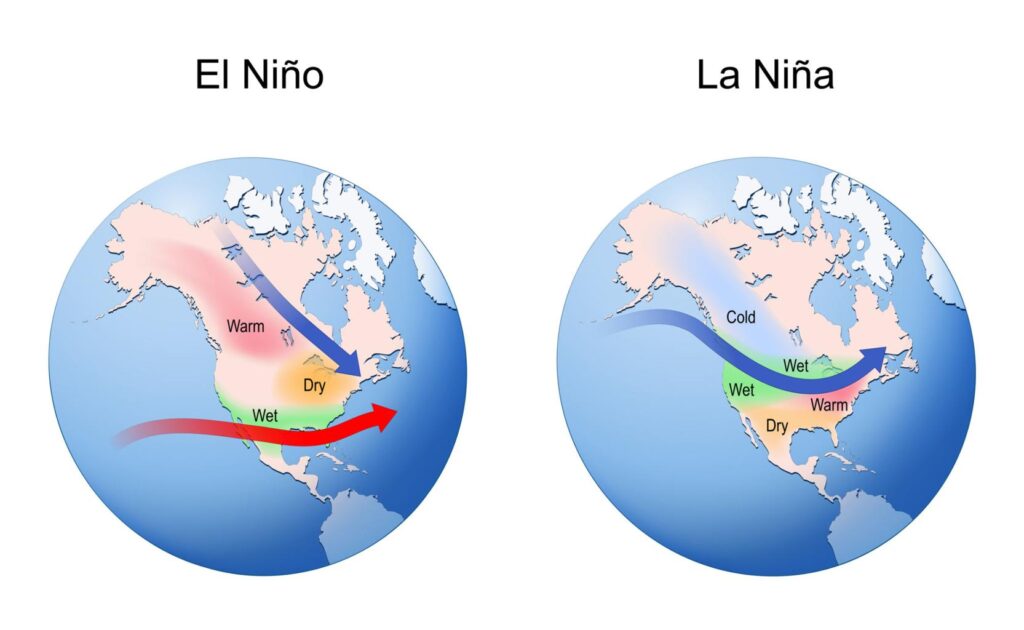
3. Colder Winters in North America
La Niña can also influence winter weather in North America.
Typical patterns include:
-
Colder and snowier winters in northern United States and Canada
-
Warmer and drier conditions in the southern United States
These changes occur because La Niña shifts the jet stream, which is a fast-moving band of air that directs storm systems.
4. More Hurricanes in the Atlantic
La Niña tends to increase hurricane activity in the Atlantic Ocean. The cooler Pacific waters reduce wind shear in the Atlantic, allowing storms to develop more easily.
As a result, La Niña years often see:
-
More tropical storms
-
Stronger hurricanes
-
Longer hurricane seasons
5. Stronger Monsoon Activity in Some Regions
La Niña can strengthen monsoon systems in certain parts of the world, including India and Southeast Asia. Increased moisture in the atmosphere can bring above-average rainfall during the monsoon season.
However, the exact impact varies depending on other climate factors.
How La Niña Affects Temperature Patterns
La Niña doesn’t just affect rainfall—it also influences global temperatures.
Global Cooling Effect
Because large areas of the Pacific Ocean become cooler than normal, the overall global temperature tends to drop slightly during La Niña years.
However, this cooling effect is usually temporary and does not reverse long-term climate warming trends.
Regional Temperature Changes
Different regions experience different temperature impacts.
Examples include:
-
Colder winters in northern North America
-
Warmer weather in parts of Southeast Asia
-
Milder winters in parts of Europe
These changes occur due to shifts in atmospheric circulation and ocean heat distribution.
How Long Does La Niña Last?
A typical La Niña event lasts between 9 months and 12 months, but some events can persist for two years or longer.
Meteorologists monitor ocean temperatures using:
-
Weather satellites
-
Ocean buoys
-
Climate models
These tools help scientists track developing La Niña conditions and predict potential weather impacts months in advance.
La Niña vs El Niño
La Niña is often compared with El Niño because they are opposite phases of the same climate cycle.
| Feature | La Niña | El Niño |
|---|---|---|
| Ocean Temperature | Cooler than average | Warmer than average |
| Trade Winds | Stronger | Weaker |
| Rainfall | More rain in Asia & Australia | More rain in Americas |
| Global Temperature | Slight cooling | Slight warming |
Both phases influence global weather patterns, agriculture, and ecosystems.
Why La Niña Is Important for Weather Forecasting
Understanding La Niña helps meteorologists predict seasonal weather patterns.
For example, forecasters can anticipate:
-
Potential flooding in certain regions
-
Drought risks in others
-
Increased hurricane activity
-
Changes in winter temperatures
This information helps governments and communities prepare for extreme weather events and manage resources like water and agriculture.
Conclusion
La Niña is a powerful climate phenomenon that begins in the Pacific Ocean but affects weather patterns across the entire planet. By cooling ocean temperatures and strengthening trade winds, La Niña alters rainfall, temperature patterns, and storm activity in many regions.
Although it occurs naturally every few years, its impacts can be significant, influencing agriculture, travel, disaster preparedness, and global climate patterns. As weather monitoring technology improves, scientists continue to refine forecasts and better understand how La Niña shapes the Earth’s complex climate system.
FAQs About La Niña
What causes La Niña?
La Niña is caused by stronger-than-normal trade winds that push warm water toward the western Pacific, allowing cold water to rise in the eastern Pacific Ocean.
How often does La Niña occur?
La Niña typically occurs every 2 to 7 years as part of the El Niño–Southern Oscillation climate cycle.
Does La Niña cause colder global temperatures?
Yes, La Niña can cause slightly cooler global temperatures because large parts of the Pacific Ocean become cooler than average.
Which countries are most affected by La Niña?
Regions commonly affected include Australia, Indonesia, the United States, South America, and parts of Asia.
Is La Niña dangerous?
La Niña itself is not dangerous, but it can increase the risk of floods, hurricanes, droughts, and extreme weather events in different parts of the world.