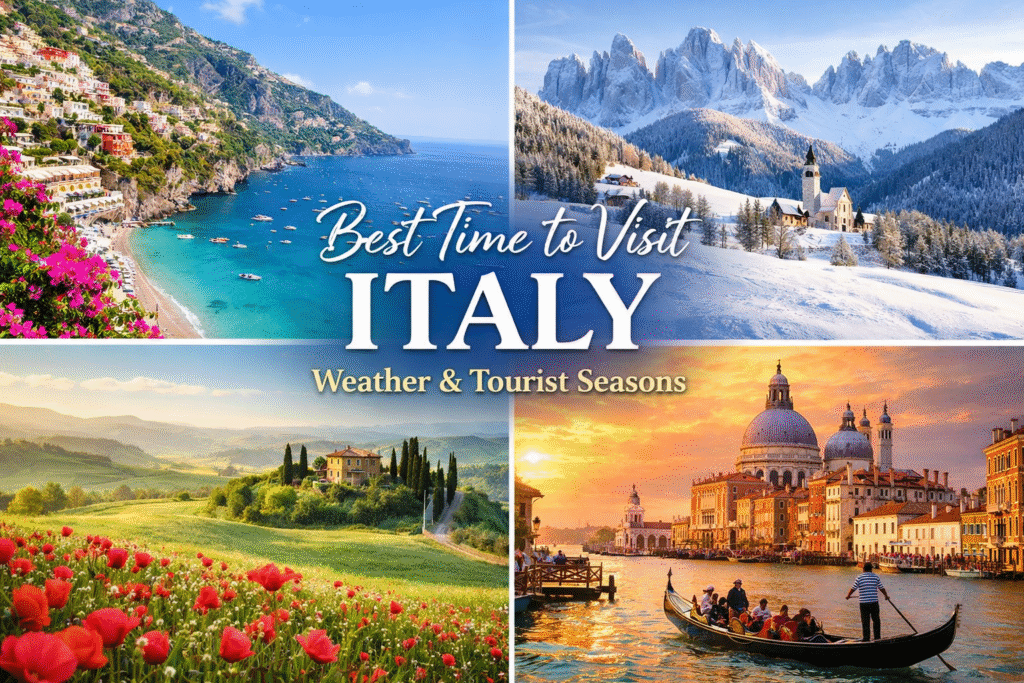
Italy is one of the most popular travel destinations in the world, known for its rich history, stunning landscapes, delicious cuisine, and iconic cities. From the canals of Venice to the vineyards of Tuscany and the ancient ruins of Rome, every part of the country offers something unique. However, choosing the best time to visit Italy can greatly influence your travel experience. Weather conditions, tourist crowds, and seasonal activities all play an important role in planning the perfect trip.
In this guide, we’ll explore the best time to visit Italy based on weather patterns and tourist seasons so you can decide when to plan your Italian adventure.
Understanding Italy’s Travel Seasons
Italy experiences four distinct seasons, and tourism fluctuates throughout the year. The country generally has three main travel seasons:
High Season: June to August
Shoulder Season: April to May and September to October
Low Season: November to March
Each season offers different advantages depending on what type of travel experience you’re looking for.
Spring in Italy (April to June)
Spring is widely considered one of the best times to visit Italy. During this period, the weather becomes mild and pleasant after the cooler winter months, making it ideal for sightseeing and outdoor exploration.
Temperatures typically range from 15°C to 25°C (59°F to 77°F), depending on the region. Flowers bloom across the countryside, and landscapes become vibrant, particularly in regions like Tuscany and the Amalfi Coast.
One of the biggest advantages of visiting during spring is the balance between comfortable weather and manageable tourist crowds. While popular cities such as Rome, Florence, and Venice begin to get busier, they are still less crowded than during peak summer months.
Spring is also a great time for outdoor activities such as walking tours, vineyard visits, and exploring historic towns. The countryside looks beautiful, and photography opportunities are excellent.
However, April can occasionally bring rain showers, especially in northern Italy. Packing a light jacket and umbrella is recommended.
Best for:
-
Sightseeing
-
Cultural trips
-
Countryside tours
-
Moderate crowds
Summer in Italy (June to August)
Summer is the peak tourist season in Italy. Travelers from around the world visit during these months to enjoy warm weather, beaches, festivals, and vibrant city life.
Temperatures often reach 30°C to 35°C (86°F to 95°F), particularly in central and southern regions. Cities like Rome, Florence, and Milan can become extremely hot, making long days of sightseeing somewhat exhausting.
The coastal areas such as the Amalfi Coast, Sicily, Sardinia, and Cinque Terre are especially popular in summer. Beach tourism reaches its highest levels during this time.
However, summer also brings the largest crowds and the highest prices for accommodation and flights. Major tourist attractions often have long queues, and cities can feel very busy.
Another important factor is the Italian holiday known as Ferragosto, celebrated on August 15. During this period, many locals take vacations, and some businesses may close temporarily, especially in smaller towns.
Despite the heat and crowds, summer offers a lively atmosphere with outdoor concerts, food festivals, and cultural events.
Best for:
-
Beach vacations
-
Festivals and nightlife
-
Island hopping
-
Coastal destinations
Autumn in Italy (September to October)
Autumn is another excellent time to visit Italy, often considered the most balanced travel season. The intense summer heat begins to fade, and tourist numbers start to decrease.
Temperatures remain comfortable, usually between 18°C and 26°C (64°F to 79°F). Early autumn still feels quite warm, especially in southern Italy.
One of the highlights of visiting during this time is the harvest season. Vineyards across Tuscany, Piedmont, and other wine regions become busy with grape harvesting and wine festivals. Food lovers will enjoy seasonal specialties such as truffles, mushrooms, chestnuts, and freshly pressed olive oil.
Autumn landscapes are also stunning, with golden vineyards and colorful foliage creating picturesque scenery.
Cities become easier to explore as crowds thin out, making it a great time for museum visits, historical tours, and culinary experiences.
Rainfall increases slightly in October, but it rarely disrupts travel plans significantly.
Best for:
-
Food and wine tourism
-
Photography
-
Comfortable sightseeing
-
Fewer crowds
Winter in Italy (November to March)
Winter is the low tourist season in most parts of Italy, except for ski destinations in the Alps and popular Christmas markets.
Temperatures vary widely depending on the region. Northern Italy can experience cold weather, sometimes dropping below 0°C (32°F), while southern regions remain milder, averaging around 10°C to 15°C (50°F to 59°F).
The biggest advantage of traveling in winter is the significantly lower number of tourists. Popular attractions in cities like Rome, Florence, and Venice become much easier to explore without long lines.
Hotel prices are also generally lower, making winter a more budget-friendly travel option.
December brings festive Christmas markets, holiday lights, and seasonal traditions throughout the country. Cities such as Milan, Verona, and Bolzano host beautiful Christmas celebrations.
If you enjoy winter sports, the Italian Alps offer excellent skiing opportunities in destinations like Cortina d’Ampezzo and the Dolomites.
However, some coastal towns and smaller tourist villages may have limited services during the winter months.
Best for:
-
Budget travel
-
Ski vacations
-
Christmas markets
-
Quiet sightseeing
Best Time for Different Travel Experiences
Choosing the best time to visit Italy also depends on what type of experience you want.
For sightseeing:
April, May, September, and October offer the most comfortable weather and manageable crowds.
For beaches:
June through August is ideal for coastal destinations and island trips.
For food and wine:
September and October are perfect due to harvest season and food festivals.
For budget travel:
November through February typically offers the lowest accommodation prices.
For festivals:
Summer hosts many cultural events, music festivals, and outdoor celebrations.
Regional Weather Differences in Italy
Italy’s geography creates different climates across regions.
Northern Italy:
Cities like Milan, Venice, and Turin experience colder winters and occasional snowfall. Summers can be hot and humid.
Central Italy:
Rome, Florence, and Tuscany have warm summers and mild winters. Spring and autumn are ideal here.
Southern Italy and Islands:
Regions like Sicily, Naples, and Sardinia enjoy warmer temperatures year-round with longer beach seasons.
Understanding these regional differences helps travelers plan more effectively based on preferred activities.
Final Thoughts
The best time to visit Italy ultimately depends on your travel preferences. If you want pleasant weather and fewer crowds, spring and autumn are generally the best choices. Summer is perfect for beach lovers and festival seekers, while winter offers quiet sightseeing and budget-friendly travel opportunities.
Italy remains a captivating destination throughout the year, with each season offering unique experiences. Whether you’re wandering through ancient streets, enjoying authentic Italian cuisine, or relaxing along scenic coastlines, careful timing can help you make the most of your journey.
Frequently Asked Questions
What is the best month to visit Italy?
May and September are often considered the best months because they offer pleasant weather, fewer crowds, and great sightseeing conditions.
When is the cheapest time to travel to Italy?
The cheapest time to visit Italy is usually from November to February, excluding the Christmas and New Year holiday period.
Is summer too hot to visit Italy?
Summer can be very hot, especially in cities like Rome and Florence where temperatures may exceed 35°C. Coastal areas are more comfortable due to sea breezes.
When is Italy least crowded?
The least crowded months are typically January, February, and November.
Is spring a good time to visit Italy?
Yes, spring is one of the best times to visit Italy because of mild weather, blooming landscapes, and moderate tourist crowds.
What season is best for visiting Italian vineyards?
Autumn, especially September and October, is the best season for vineyard visits due to the grape harvest and wine festivals.