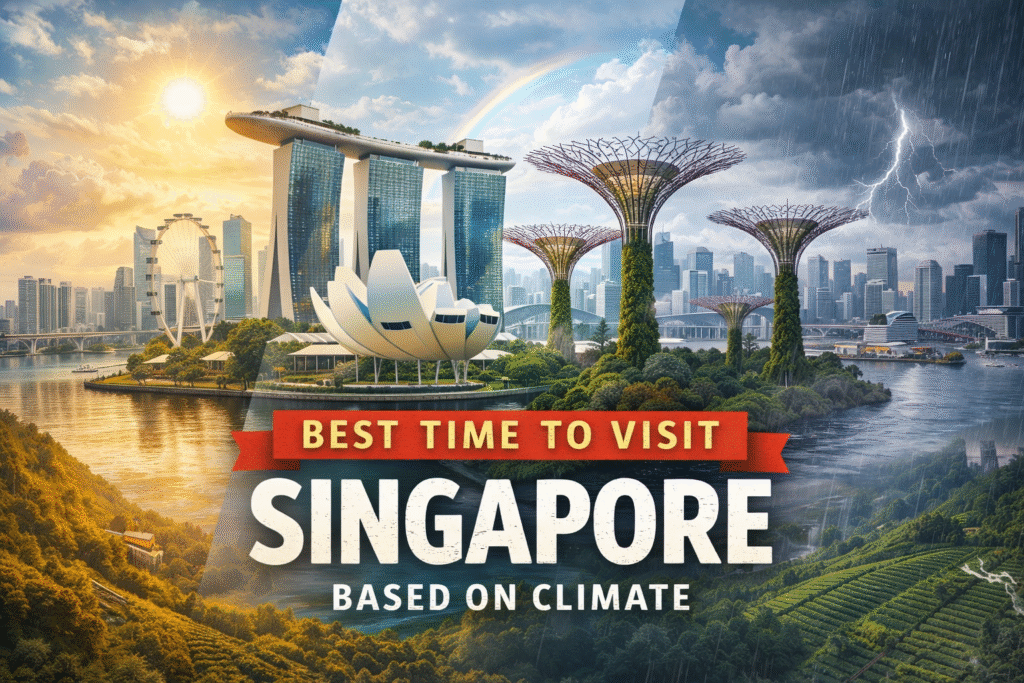
Singapore is a vibrant, ultra-modern island city known for its skyline, gardens, shopping districts, and food culture. Because it lies just one degree north of the equator, Singapore has a tropical rainforest climate — meaning it’s warm and humid all year round.
Unlike destinations with four distinct seasons, Singapore experiences consistent temperatures, high humidity, and periodic rainfall throughout the year. So when is the best time to visit based purely on climate?
Let’s break it down month by month and season by season to help you plan the perfect trip.
Understanding Singapore’s Climate
Singapore’s climate is defined by:
-
Average temperatures: 25°C to 32°C
-
High humidity (70–90%)
-
Frequent but short rain showers
-
No true winter or summer
-
Two main monsoon periods
The weather stays warm year-round, but rainfall patterns shift across the year.
🌧️ Northeast Monsoon (November to January)
Weather Overview
This is the wettest period of the year. Expect:
-
Frequent rain showers
-
Occasional heavy downpours
-
Cloudy skies
-
High humidity
-
Temperatures around 24°C to 31°C
December is usually the rainiest month.
What to Expect as a Traveler
Rain often comes in intense bursts rather than all-day drizzle. However, outdoor sightseeing can sometimes be disrupted.
Attractions like Gardens by the Bay and Marina Bay Sands remain accessible, but rooftop views may be affected by cloudy weather.
Pros
-
Slightly cooler evenings
-
Fewer heat waves
-
Festive season atmosphere
Cons
-
Heavy rainfall
-
Outdoor plans may need flexibility
Best For: Travelers who don’t mind rain and want slightly cooler weather.
☀️ Inter-Monsoon Period (February to April)
Weather Overview
This is often considered one of the best climate windows to visit Singapore.
-
Less rainfall compared to December–January
-
Plenty of sunshine
-
Temperatures around 25°C to 32°C
-
Occasional short thunderstorms
Humidity remains high, but rain interruptions are fewer.
Why This Period Is Ideal
Outdoor attractions such as:
-
Sentosa
-
Singapore Zoo
-
Universal Studios Singapore
are more enjoyable with clearer skies and manageable rainfall.
Pros
-
Balanced rainfall
-
Good for sightseeing
-
Great beach weather
Cons
-
Still humid
-
Occasional afternoon thunderstorms
Best For: First-time visitors and families wanting stable sightseeing conditions.
🌤️ Southwest Monsoon (May to September)
Weather Overview
This period is generally drier than the Northeast Monsoon, but temperatures can feel hotter.
-
Temperatures: 26°C to 33°C
-
Occasional short showers
-
Hazy conditions possible (depending on regional factors)
-
High humidity
June to August can feel especially warm.
What Travelers Should Know
The heat can feel intense due to humidity. However, rain is less disruptive compared to late-year monsoon months.
Outdoor attractions like:
-
Merlion Park
-
Clarke Quay
-
East Coast Park
are fully accessible and lively.
Pros
-
Less heavy rainfall
-
Good for outdoor exploration
-
Longer sunny days
Cons
-
Higher perceived heat
-
Occasional haze
Best For: Beach lovers, food explorers, and shoppers.
🌦️ October (Transition Month)
October is a transitional period before the heavy rains of November.
-
Increasing rainfall
-
High humidity
-
Warm temperatures
It’s still manageable for sightseeing but expect occasional showers.
Month-by-Month Climate Snapshot
| Month | Rainfall | Heat Level | Travel Comfort |
|---|---|---|---|
| Jan | High | Moderate | Fair |
| Feb | Low | Warm | Good |
| Mar | Moderate | Warm | Good |
| Apr | Moderate | Hot | Good |
| May | Low | Hot | Good |
| Jun | Low | Hot | Good |
| Jul | Low | Hot | Good |
| Aug | Low | Hot | Good |
| Sep | Moderate | Hot | Good |
| Oct | Increasing | Warm | Fair |
| Nov | High | Moderate | Fair |
| Dec | Very High | Moderate | Fair |
So, When Is the Best Time to Visit Singapore Based on Climate?
If you want the most comfortable balance of sunshine and manageable rainfall, the best months are:
⭐ February to April
This period offers:
-
Relatively less rainfall
-
Plenty of sunshine
-
Ideal sightseeing weather
-
Good beach conditions
If you don’t mind humidity and want fewer rain interruptions, May to September is also a strong option.
Avoid November and December if you want minimal rain disruption.
Climate Travel Tips for Singapore
-
Wear lightweight, breathable clothing
-
Stay hydrated
-
Carry a small umbrella (rain showers are common year-round)
-
Use sunscreen daily
-
Plan indoor attractions during afternoon heat
Singapore’s excellent infrastructure, covered walkways, and efficient transport system make it easy to navigate regardless of weather.
Final Thoughts
Singapore is a year-round destination thanks to its stable tropical climate. While there’s no dramatic seasonal shift, rainfall patterns and humidity levels can influence your comfort and itinerary.
For the best climate-based experience, aim for February to April. But no matter when you visit, Singapore’s vibrant city life, attractions, and food scene ensure a memorable trip.
Frequently Asked Questions (FAQs)
1. What is the coolest month in Singapore?
December and January are slightly cooler due to increased rainfall.
2. Does Singapore have a winter season?
No, Singapore has a tropical climate and does not experience traditional winter.
3. When is Singapore least rainy?
February and June–August generally see less rainfall.
4. Is Singapore too hot in summer?
Temperatures stay consistent year-round, but May–August can feel hotter due to humidity.
5. Is it safe to travel during monsoon season?
Yes. Rain showers are usually short, and the city is well-prepared for heavy rain.
6. What should I pack for Singapore?
Light clothing, sunscreen, comfortable walking shoes, and a compact umbrella.