How Climate Change Is Reshaping Weather Patterns Around the World
Climate Change Is Reshaping Weather Patterns has always been a part of human life—something we talk about daily but rarely control. From sunny days to stormy nights, the atmosphere constantly changes, shaping everything from agriculture to travel. But in recent decades, scientists have noticed something unsettling: the weather itself is changing. Not just in cycles or random fluctuations, but in a persistent, global way. This shift is largely driven by climate change, a result of human activity that’s warming the planet and disrupting natural systems.
In this blog, we’ll explore how climate change is transforming global weather patterns, what that means for everyday life, and what can be done to reduce its impact.
The Link Between Climate and Weather
To understand how climate change reshapes weather, we first need to clarify the difference between climate and weather.
- Weather is what happens in the short term — like a rainy afternoon or a windy week.
- Climate refers to the long-term patterns of temperature, precipitation, and atmospheric conditions in a region.
When we say the climate is changing, it means the average weather patterns — such as heat, rainfall, droughts, and storms — are shifting over decades. These changes make some places wetter, others drier, and increase the frequency of extreme weather events.
Rising Temperatures: The Root of It All
The world has warmed by about 1.2°C (2.2°F) since the late 19th century, primarily due to the burning of fossil fuels like coal, oil, and gas. This added heat doesn’t distribute evenly across the planet. Instead, it fuels a cascade of weather disruptions:
- Hotter summers: Heatwaves are lasting longer and reaching record highs. For instance, Europe and parts of Asia have experienced extreme temperatures surpassing 45°C (113°F).
- Warmer oceans: The ocean absorbs 90% of excess heat, disrupting marine ecosystems and powering stronger storms.
- Melting ice: Polar regions are warming nearly four times faster than the global average, reducing ice cover and affecting global weather circulation.
Warmer air also holds more moisture, which directly impacts rainfall, storms, and humidity levels — creating both floods and droughts in different regions.
Floods and Storms: The Rising Cost of Water
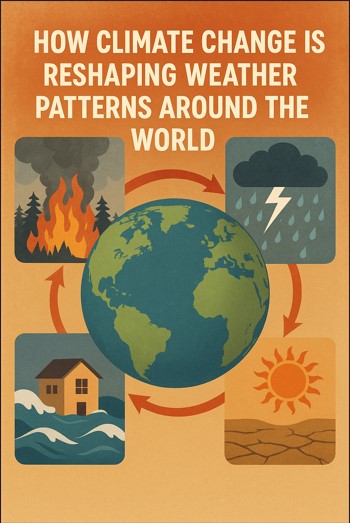
Climate change intensifies the water cycle, leading to heavier rainfall in some areas and severe drought in others.
- Increased rainfall and flooding: Warmer air holds more water vapor. When that vapor condenses, it releases large amounts of rain. Cities like Mumbai, Jakarta, and New York have faced record-breaking rainfall events in recent years.
- More powerful hurricanes: Rising ocean temperatures act as fuel for tropical storms. Hurricanes and typhoons are becoming stronger and slower-moving, meaning they cause more flooding and destruction.
- Changing storm patterns: Weather systems are shifting toward the poles, meaning regions once spared from tropical storms might now experience them more often.
According to the World Meteorological Organization (WMO), the number of weather-related disasters has increased fivefold over the last 50 years — yet better forecasting has reduced the number of deaths, even as economic losses rise.
Droughts and Wildfires: When Rain Stops Coming
While some regions drown in excess rain, others face the opposite problem — a severe lack of it.
- Prolonged droughts: As global temperatures climb, evaporation increases, drying out soil and vegetation. Countries like Spain, Australia, and parts of the U.S. West Coast are enduring historic droughts that devastate crops and water supplies.
- Wildfires: Drier conditions and heatwaves create the perfect environment for wildfires. The 2019–2020 Australian bushfires burned over 18 million hectares, and similar tragedies occur regularly in California, Greece, and Canada.
- Economic fallout: Droughts reduce agricultural productivity, raise food prices, and force communities to migrate in search of water — a growing issue known as climate migration.
These changes don’t just impact ecosystems; they directly affect global food security and economies.
Disrupted Seasons: When Nature Gets Confused
Have you noticed how winters seem shorter, or how spring arrives earlier each year? Climate change is disrupting seasonal cycles in many parts of the world.
- Earlier springs: Plants are blooming sooner, and animals are migrating earlier — sometimes before food sources are available.
- Unpredictable winters: Some regions see milder winters, while others face harsher snowstorms due to disrupted jet streams.
- Agricultural confusion: Farmers rely on consistent weather cycles. When seasons shift unpredictably, crop yields suffer.
This “seasonal confusion” affects everything from food production to wildlife breeding patterns.
Atmospheric Chaos: The Jet Stream Effect
One of the lesser-known but crucial impacts of global warming is the disruption of the jet stream — a fast-flowing river of air that circles the Earth. The jet stream influences weather in North America, Europe, and Asia.
As the Arctic warms faster than the equator, this temperature difference weakens the jet stream, causing it to wobble. This leads to:
- Longer cold spells in normally temperate regions
- Persistent heatwaves that linger over continents
- Stagnant weather systems causing floods or droughts
This “wavy jet stream” explains why some regions experience extreme cold snaps even in a warming world — paradoxical but scientifically sound.
Urban Impact: Cities Under Pressure
Cities are particularly vulnerable to shifting weather patterns. Concrete and asphalt trap heat, creating urban heat islands that can be several degrees warmer than surrounding rural areas.
- Heatwaves in cities can strain power grids and cause health emergencies.
- Flooding overwhelms drainage systems and damages infrastructure.
- Poor air quality worsens as stagnant weather traps pollutants.
As more than 55% of the world’s population lives in cities (a number expected to reach 70% by 2050), building climate-resilient urban infrastructure is becoming a top global priority.
Human and Environmental Toll
The changing weather patterns affect every aspect of life:
- Health risks: Increased heat leads to dehydration, respiratory issues, and the spread of diseases like malaria and dengue.
- Economic losses: Extreme weather damages infrastructure, reduces productivity, and increases insurance costs.
- Ecosystem stress: Coral reefs, forests, and wetlands are struggling to adapt to new climate realities.
According to the UN Intergovernmental Panel on Climate Change (IPCC), the effects of changing weather patterns could push millions into poverty and displace populations due to rising seas and crop failures.
What Can Be Done? Solutions and Hope
While the challenges are immense, solutions exist — and they’re gaining momentum worldwide.
- Transition to renewable energy: Wind, solar, and hydroelectric power reduce carbon emissions and reliance on fossil fuels.
- Smarter agriculture: Drought-resistant crops and sustainable farming methods can mitigate food shortages.
- Urban planning: Green roofs, improved drainage, and heat-resistant infrastructure make cities more resilient.
- Reforestation and conservation: Protecting and restoring forests absorbs CO₂ and stabilizes regional climates.
- Global cooperation: Agreements like the Paris Accord aim to limit warming to below 1.5°C — a target that requires every nation’s commitment.
On an individual level, small actions like conserving energy, reducing waste, and supporting eco-friendly policies collectively make a difference.
Conclusion: A Changing Sky, A Shared Responsibility
The weather has always been unpredictable, but never before has it changed so rapidly — or so directly because of us. Climate change is reshaping global weather patterns, turning familiar seasons into uncertain extremes. Yet it’s also an opportunity for innovation, collaboration, and adaptation.
By understanding how our actions influence the atmosphere, we can begin to restore balance — one choice, one policy, and one planet at a time. The future of our weather, and indeed our world, depends on what we do next.