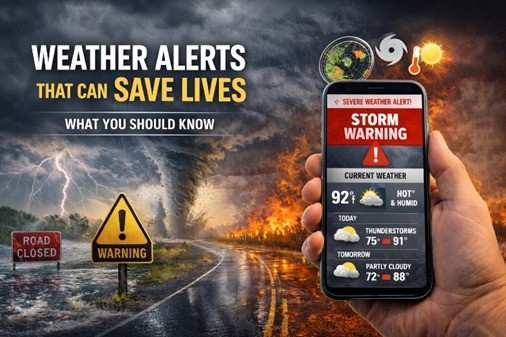
Weather Alerts That Can Save Lives: What You Should Know
Understand how timely Weather Alerts and accurate weather forecast updates can save lives by helping you prepare for storms, heatwaves, floods, and extreme weather events.
In today’s fast-changing world, weather alerts are more than just notifications on your phone — they are life-saving tools. From sudden thunderstorms and heatwaves to cyclones and floods, extreme weather events are becoming more frequent and intense. Understanding how weather alerts, current weather updates, and accurate weather forecasts work can help you stay safe, prepared, and informed.
This guide explains everything you need to know about weather alerts, why they matter, and how to use weather today and weather tomorrow forecasts effectively to protect yourself and your loved ones.
What Are Weather Alerts?
Weather alerts are official warnings issued by meteorological agencies to inform the public about potentially dangerous weather conditions. These alerts are based on real-time data, satellite imagery, radar systems, and advanced forecasting models.
A weather alert may warn you about:
- Heavy rainfall
- Heatwaves
- Thunderstorms
- Cyclones
- Floods
- Extreme cold
- High winds
By tracking current weather conditions, meteorologists can issue alerts early enough to reduce injuries, property damage, and loss of life.
Why Weather Alerts Are So Important
Weather can change rapidly, sometimes within minutes. A clear morning can turn into a dangerous storm by afternoon. Weather alerts provide early warnings, allowing people to:
- Take shelter
- Avoid travel
- Secure property
- Prepare emergency supplies
- Protect vulnerable individuals
Ignoring weather today alerts can put lives at risk. According to global disaster reports, timely weather warnings have significantly reduced fatalities over the past decades.
Types of Weather Alerts You Should Know
Understanding different alert types helps you react appropriately.
- Severe Weather Alerts
These warn of dangerous conditions such as thunderstorms, lightning, hail, or strong winds.
What to do:
- Stay indoors
- Avoid open areas
- Secure loose objects
- Heatwave Alerts
Issued when temperatures rise above safe limits for several days.
What to do:
- Stay hydrated
- Avoid outdoor activities during peak heat
- Check current weather temperature regularly
- Flood Alerts
Issued during heavy rainfall or rising river levels.
What to do:
- Move to higher ground
- Avoid flooded roads
- Monitor weather forecast updates closely
- Cyclone or Storm Alerts
These are among the most critical alerts, often issued days in advance.
What to do:
- Follow evacuation orders
- Stock emergency supplies
- Track weather tomorrow forecasts for movement updates
How Weather Forecasting Works
A weather forecast is created using multiple data sources:
- Weather satellites
- Radar systems
- Ground stations
- Ocean buoys
- Computer prediction models
Meteorologists analyze this data to predict weather today and weather tomorrow with increasing accuracy. Modern technology has made forecasts more reliable than ever, especially for short-term predictions.
Current Weather vs Weather Forecast: What’s the Difference?
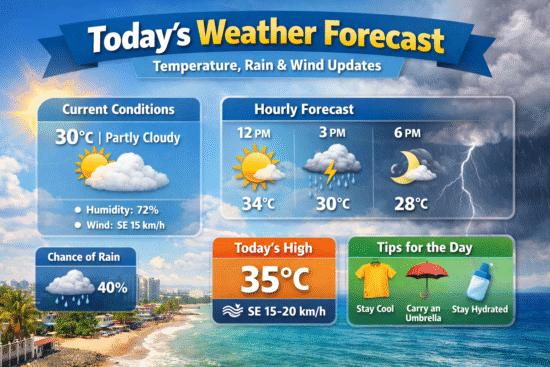
- Current Weather: Real-time conditions such as temperature, humidity, wind speed, and rainfall.
- Weather Forecast: Predictions of future conditions based on data and models.
Both are important. Checking current weather helps you understand what’s happening now, while weather forecast helps you plan ahead.
How Weather Alerts Save Lives
Early Warnings Prevent Tragedy
Weather alerts give people precious time to act. Even a 30-minute warning before a severe storm can save lives.
Protecting Vulnerable Communities
Children, elderly people, and those with medical conditions rely heavily on weather alerts for safety during extreme conditions.
Reducing Economic Loss
By preparing early, businesses and households can minimize damage caused by severe weather.
How to Stay Updated with Weather Alerts
To stay informed, you should:
- Use reliable weather websites or apps
- Enable push notifications for alerts
- Follow official meteorological departments
- Check weather today before leaving home
- Review weather tomorrow when planning travel
A dependable weather platform provides real-time alerts, radar maps, and detailed weather forecast information in one place.
Common Mistakes People Make with Weather Alerts
Despite easy access to information, many people still make dangerous mistakes:
- Ignoring alerts assuming “nothing will happen”
- Relying on outdated forecasts
- Not checking current weather before travel
- Misunderstanding alert severity levels
Taking alerts seriously — even if previous warnings seemed mild — is crucial.
Weather Alerts in the Age of Climate Change
Climate change has increased the frequency of extreme weather events. Heatwaves are hotter, storms are stronger, and rainfall is heavier. This makes accurate weather forecasting and timely alerts more important than ever.
As climate patterns change, staying updated with weather today and weather tomorrow is no longer optional — it’s essential.
How Technology Is Improving Weather Alerts
Modern weather platforms use:
- Artificial intelligence
- Machine learning
- High-resolution radar
- Satellite data
These advancements improve prediction accuracy, reduce false alarms, and provide hyper-local alerts tailored to your location.
Practical Tips for Using Weather Alerts Effectively
- Check current weather every morning
- Review weather forecast for the next 24–48 hours
- Enable severe weather notifications
- Share alerts with family and friends
- Have an emergency plan ready
Preparedness combined with accurate information can make all the difference.
Conclusion: Stay Alert, Stay Safe
Weather alerts are not just digital messages — they are critical warnings designed to save lives. By understanding how alerts work and regularly checking weather today, weather tomorrow, and current weather conditions, you can make smarter decisions and stay protected.
In a world where weather patterns are becoming increasingly unpredictable, staying informed through reliable weather forecasts is one of the simplest yet most powerful ways to ensure safety.
Make weather awareness part of your daily routine — because the right alert at the right time can truly save lives.