
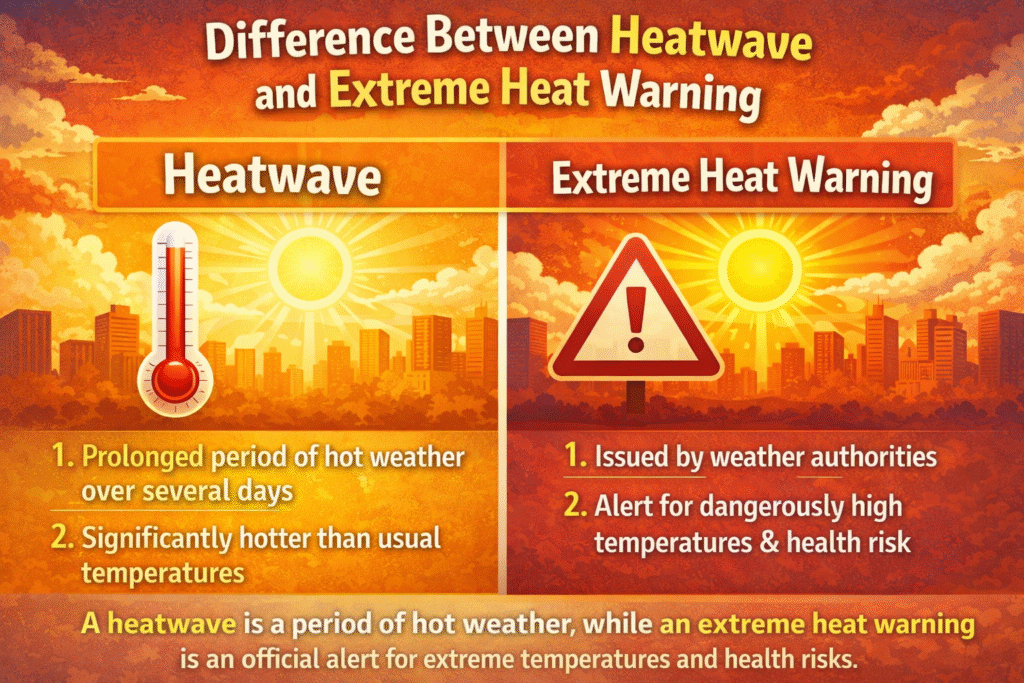
As global temperatures continue to rise, terms like “heatwave” and “extreme heat warning” are becoming more common in weather updates. Many people assume they mean the same thing, but they are actually different. One refers to a weather condition, while the other is an official safety alert issued by authorities.
Understanding the distinction is important for protecting your health, your family, and even your business operations. Let’s explore both concepts in detail.
What Is a Heatwave?
A heatwave is a prolonged period of unusually high temperatures compared to the normal climate of a specific region. It generally lasts for at least two or more consecutive days, but in severe cases, it can continue for weeks.
A heatwave is determined based on:
-
Temperature levels compared to historical averages
-
Duration of hot conditions
-
Geographic region
For example, in countries like India, a heatwave may be declared when temperatures reach 40°C or above in plains, or when there is a significant departure (around 4.5°C to 6.4°C or more) above normal seasonal temperature.
In other countries, definitions may differ. Some regions consider the heat index (temperature + humidity), while others focus strictly on air temperature.
Key Features of a Heatwave
-
Sustained high daytime temperatures
-
Little or no nighttime cooling
-
Covers a large area
-
Can last several days or weeks
-
May lead to drought conditions
A heatwave is simply the meteorological event — the actual occurrence of unusually hot weather.
What Is an Extreme Heat Warning?
An extreme heat warning is an official alert issued by weather or government authorities when heat conditions are expected to become dangerously high and pose serious risks to public health.
This warning is not just about temperature. It considers multiple factors such as:
-
Heat index
-
Humidity levels
-
Duration of high temperatures
-
Impact on vulnerable populations
When an extreme heat warning is issued, it means immediate precautions should be taken.
Unlike a heatwave, which describes the weather itself, an extreme heat warning focuses on public safety and risk management.
Core Difference: Weather Event vs Public Alert
The easiest way to understand the difference is:
-
Heatwave = The prolonged hot weather event
-
Extreme Heat Warning = Official safety alert about dangerous heat
A heatwave may occur without triggering an extreme heat warning. However, an extreme heat warning is typically issued when a heatwave reaches a level that threatens health and safety.
Detailed Comparison
| Factor | Heatwave | Extreme Heat Warning |
|---|---|---|
| Type | Weather condition | Official alert |
| Nature | Natural occurrence | Issued by authorities |
| Purpose | Describes temperature pattern | Warns about health danger |
| Duration | Several days or longer | Specific alert period (often 24–72 hours) |
| Health Risk | May or may not be dangerous | Considered dangerous |
| Action Required | Monitor conditions | Take immediate precautions |
When Does a Heatwave Become Dangerous?
Not all heatwaves are life-threatening. However, certain conditions increase danger:
-
High humidity (raises heat index)
-
Elevated nighttime temperatures
-
Lack of access to cooling
-
Power outages
-
Water shortages
-
Prolonged exposure to sunlight
When these factors combine, authorities may issue an extreme heat warning.
How Extreme Heat Impacts the Human Body
Extreme heat affects the body in serious ways.
The body naturally cools itself through sweating. But during intense heat:
-
Dehydration occurs quickly
-
Sweat evaporation becomes less effective in humid conditions
-
Body temperature rises
-
Organs begin to experience stress
Common heat-related illnesses include:
Heat Cramps
Painful muscle spasms due to fluid and electrolyte imbalance.
Heat Exhaustion
Symptoms include dizziness, weakness, heavy sweating, nausea, and headache.
Heatstroke
A life-threatening emergency. Symptoms include:
-
Body temperature above 40°C
-
Confusion or unconsciousness
-
Rapid heartbeat
-
Dry or very hot skin
Extreme heat warnings are issued to prevent these serious outcomes.
Vulnerable Populations
Some groups are more at risk during heatwaves and extreme heat warnings:
Elderly Individuals
They may have reduced ability to regulate body temperature.
Children and Infants
They dehydrate faster and may not recognize symptoms early.
Outdoor Workers
Construction workers, delivery personnel, farmers, and traffic police face higher exposure.
People with Chronic Illnesses
Conditions like heart disease, diabetes, and respiratory problems increase vulnerability.
Low-Income Communities
Limited access to air conditioning or cooling systems increases risk.
Authorities consider these groups when deciding to issue an extreme heat warning.
Heatwave, Heat Advisory, and Extreme Heat Warning
Weather agencies often use multiple alert levels:
-
Heat Advisory: Hot conditions expected; caution advised.
-
Excessive Heat Watch: Dangerous heat possible in coming days.
-
Extreme Heat Warning: Dangerous heat is happening or imminent.
Each step indicates increasing urgency and required action.
Urban Heat Island Effect
Cities often experience higher temperatures than surrounding rural areas. This is known as the urban heat island effect.
Concrete, asphalt, and buildings absorb and retain heat. At night, they release stored heat slowly, preventing cooling. As a result, urban areas experience:
-
Higher nighttime temperatures
-
Increased risk during heatwaves
-
Greater likelihood of extreme heat warnings
This makes heat management especially important in densely populated cities.
Climate Change and Increasing Heat Events
Climate change has significantly increased the frequency, intensity, and duration of heatwaves worldwide.
Scientific research shows that:
-
Global average temperatures are rising
-
Heatwaves are becoming more common
-
Record-breaking temperatures are occurring more often
As a result, extreme heat warnings are being issued more frequently than in previous decades.
Business and Workplace Impact
Heatwaves and extreme heat warnings affect businesses in several ways:
-
Reduced worker productivity
-
Increased health risks for employees
-
Higher energy consumption
-
Disruptions in outdoor operations
-
Strain on infrastructure
Employers must take preventive measures such as:
-
Adjusting work schedules
-
Providing shaded rest areas
-
Ensuring access to drinking water
-
Monitoring workers for heat-related symptoms
In some regions, workplace safety regulations require compliance during extreme heat warnings.
Safety Tips During Heatwave and Extreme Heat Warning
Whether there is a heatwave or an official warning, these precautions help reduce risk:
-
Drink water regularly, even if not thirsty.
-
Avoid outdoor activity during peak sun hours (12 PM–4 PM).
-
Wear loose, light-colored clothing.
-
Use fans or air conditioning where available.
-
Take cool showers.
-
Avoid alcohol and caffeine.
-
Check on elderly family members and neighbors.
-
Never leave children or pets inside vehicles.
During an extreme heat warning, these steps become even more critical.
Psychological and Social Effects of Heat
Prolonged heat can also affect mental health and behavior. Studies suggest that extreme heat may lead to:
-
Increased irritability
-
Sleep disturbances
-
Reduced concentration
-
Increased stress levels
In workplaces, this can impact productivity and decision-making.
Final Conclusion
A heatwave is a prolonged period of unusually high temperatures compared to normal conditions in a region.
An extreme heat warning is an official alert issued when those temperatures pose serious health risks and require immediate precautions.
In simple terms:
-
Heatwave describes the weather.
-
Extreme heat warning describes the danger.
Understanding the difference allows individuals, families, and businesses to respond appropriately and stay safe during extreme weather conditions.
As global temperatures continue to rise, awareness and preparedness are no longer optional — they are essential.
Frequently Asked Questions (FAQs)
1. Is a heatwave the same as an extreme heat warning?
No. A heatwave is a weather event, while an extreme heat warning is an official alert about dangerous conditions.
2. How long does a heatwave usually last?
It typically lasts two or more consecutive days, but severe heatwaves can last weeks.
3. What triggers an extreme heat warning?
Dangerously high temperatures combined with humidity and health risk factors.
4. Can a heatwave occur without a warning?
Yes. Not every heatwave is severe enough to require an extreme heat warning.
5. What temperature qualifies as extreme heat?
It depends on regional climate norms and humidity levels.
6. Who is most at risk during extreme heat?
Elderly individuals, children, outdoor workers, and people with chronic illnesses.
7. What is the heat index?
The heat index measures how hot it feels when humidity is combined with air temperature.
8. Are heatwaves increasing globally?
Yes. Climate change has increased the frequency and intensity of heatwaves.
9. How can businesses prepare for extreme heat?
By adjusting schedules, ensuring hydration, providing shade, and monitoring worker health.
10. Why are extreme heat warnings important?
They help prevent heat-related illnesses and save lives by encouraging timely precautions.