Many people use the terms weather and climate interchangeably. You might hear someone say, “The climate is really hot today,” when they actually mean the weather. While the two are related, they are not the same thing.
Understanding the difference between weather and climate is essential—not just for school exams or general knowledge, but for understanding climate change, global warming, and long-term environmental shifts.
In this detailed guide, we’ll explain the difference in simple language, explore real-world examples, and break down why this distinction matters more than ever.
What Is Weather?
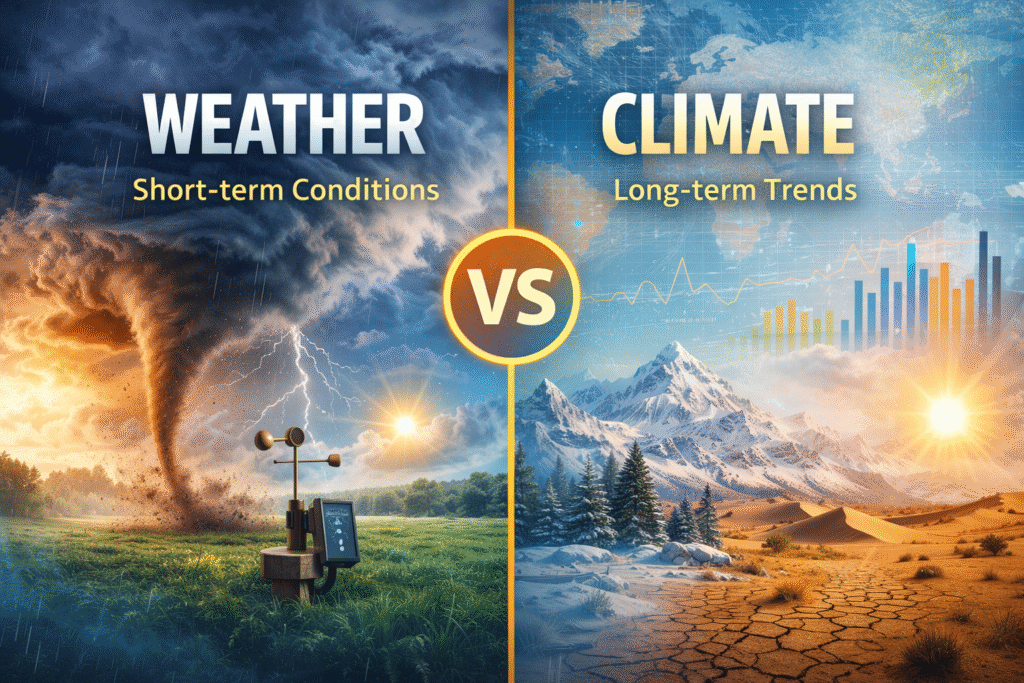
Weather refers to the short-term atmospheric conditions in a specific place at a specific time.
It answers questions like:
-
Is it raining right now?
-
How hot is it today?
-
Will it snow tomorrow?
-
Is there a thunderstorm coming this evening?
Weather can change within minutes, hours, or days. It includes conditions such as:
-
Temperature
-
Humidity
-
Wind speed and direction
-
Cloud cover
-
Rain, snow, or storms
-
Air pressure
For example:
-
It might be sunny in the morning and rainy by afternoon.
-
A city may experience a sudden thunderstorm after a hot day.
-
Temperatures can drop quickly at night.
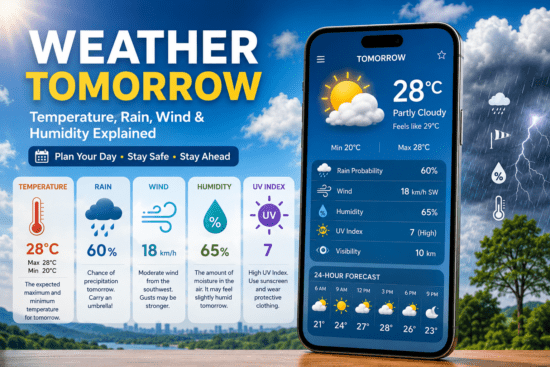
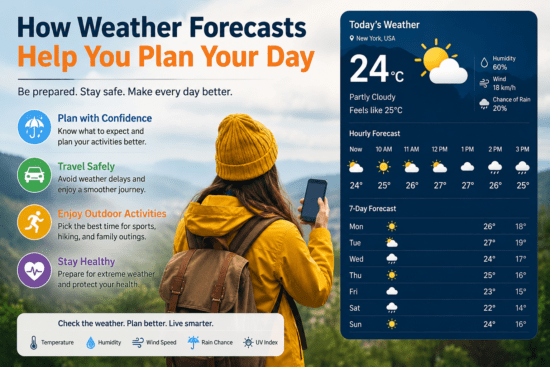
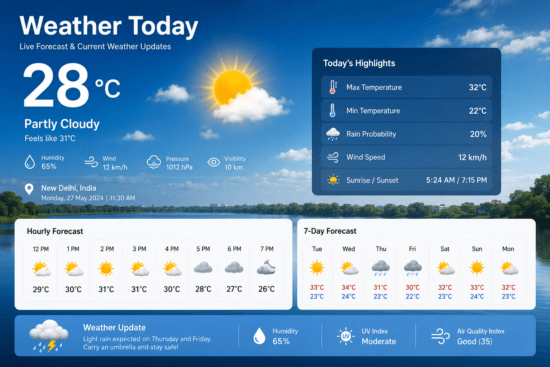
Weather is what you check on your phone before leaving home.
What Is Climate?
Climate refers to the long-term average weather patterns of a region over a long period—usually 30 years or more.
Instead of asking, “Will it rain tomorrow?” climate asks:
-
Does this region usually have hot summers?
-
Is this area generally dry or humid?
-
Does it snow every winter here?
Climate describes typical patterns, not daily changes.
For example:
-
The Sahara Desert has a hot and dry climate.
-
The Amazon rainforest has a humid tropical climate.
-
Northern Europe has a temperate climate with cold winters and mild summers.
Climate is the bigger picture of weather over decades.
The Simplest Way to Understand It
A common analogy helps make the difference clear:
Weather is your mood. Climate is your personality.
Your mood can change quickly—happy in the morning, tired in the evening. That’s like weather.
Your personality is consistent over many years—that’s like climate.
Key Differences Between Weather and Climate
Here is a simple comparison:
| Weather | Climate |
|---|---|
| Short-term conditions | Long-term patterns |
| Changes daily or hourly | Measured over decades |
| Local and immediate | Regional or global |
| Example: Rain today | Example: Wet rainy season every year |
How Weather Is Measured
Weather is measured using instruments such as:
-
Thermometers (temperature)
-
Barometers (air pressure)
-
Anemometers (wind speed)
-
Rain gauges (precipitation)
-
Satellites and radars
Meteorologists use this data to predict weather for the next few hours or days.
Weather forecasts rely on real-time information and complex computer models.
How Climate Is Measured
Climate is measured by collecting weather data over long periods—usually 30 years or more.
Scientists analyze:
-
Average temperatures
-
Seasonal rainfall patterns
-
Frequency of storms
-
Long-term drought trends
-
Snowfall averages
By examining decades of data, scientists can identify trends and patterns.
For example:
If a city’s average summer temperature rises consistently over 30 years, that indicates a climate trend—not just unusual weather.
Why Climate Changes Slowly
Climate changes much more slowly than weather because it depends on large systems such as:
-
Ocean currents
-
Earth’s rotation
-
Solar radiation
-
Greenhouse gases
-
Land and sea distribution
Weather may shift in hours, but climate shifts over decades or centuries.
However, climate change is now happening faster than in many previous natural cycles due to human activities like burning fossil fuels and deforestation.
Examples to Make It Clear
Let’s look at some real-life examples.
Example 1: A Cold Day in a Warm Region
If a tropical country experiences one unusually cold day, that is weather—not climate change.
Climate is based on long-term averages, not one event.
Example 2: Heavy Rainfall in a Dry Region
If a desert gets rain one week, that does not change its climate. The region is still classified as dry because its long-term rainfall average remains low.
Example 3: Rising Global Temperatures
If average global temperatures increase steadily over decades, that is climate change.
This trend cannot be explained by daily weather variations alone.
Why the Difference Matters
Understanding the difference between weather and climate helps avoid confusion.
For example:
Someone might say, “It’s snowing today, so global warming must not be real.”
But climate change refers to long-term trends, not a single snowstorm.
Weather can still be cold even as the global climate warms over decades.
Types of Climate Around the World
Earth has several major climate zones:
-
Tropical – Hot and humid year-round
-
Dry – Desert or semi-arid conditions
-
Temperate – Moderate temperatures with distinct seasons
-
Continental – Large seasonal temperature differences
-
Polar – Very cold year-round
Each region’s climate influences agriculture, architecture, lifestyle, and ecosystems.
How Weather and Climate Are Connected
Weather and climate are closely related.
Climate is essentially the average of weather patterns over time.
Think of it this way:
-
Weather is one day.
-
Climate is 30 years of days combined.
If weather patterns start changing consistently over decades, that indicates a climate shift.
Climate Change vs Weather Variability
Weather variability refers to normal short-term changes.
Climate change refers to long-term shifts in averages.
For example:
-
A heatwave is weather.
-
Increasing heatwaves every year over decades is climate change.
The Role of Climate in Daily Life
Climate affects:
-
What crops can grow in a region
-
What clothes people typically wear
-
Building design and insulation
-
Tourism seasons
-
Water availability
Weather affects your day.
Climate affects your lifestyle.
How Scientists Predict Climate
Climate prediction uses complex climate models that simulate Earth’s atmosphere, oceans, ice, and land systems.
Unlike weather forecasts (which predict days ahead), climate models project trends decades into the future.
They analyze greenhouse gas levels, ocean temperatures, and global patterns to estimate long-term changes.
Common Misunderstandings
-
A cold winter does not disprove global warming.
-
A hot day does not prove climate change.
-
Climate is not the same as the daily forecast.
-
One extreme event does not define climate.
Climate is about patterns, not single events.
Final Summary
Here is the simplest takeaway:
Weather is what happens today.
Climate is what usually happens over many years.
Weather changes quickly and frequently.
Climate changes slowly and gradually.
Understanding this difference helps us better interpret forecasts, climate news, and environmental discussions.
As global temperatures shift and extreme weather events become more common, knowing the distinction between weather and climate becomes even more important.
Frequently Asked Questions (FAQ)
1. What is the main difference between weather and climate?
Weather refers to short-term atmospheric conditions, while climate refers to long-term average patterns over decades.
2. How long does it take to define climate?
Climate is typically measured over a period of at least 30 years.
3. Can one storm change the climate?
No. A single storm is a weather event. Climate is determined by long-term trends.
4. Why do people confuse weather and climate?
Because both involve temperature, rain, and atmospheric conditions. The key difference is time scale.
5. Is climate change the same as global warming?
Global warming refers specifically to rising global temperatures. Climate change includes broader changes such as rainfall shifts and extreme weather patterns.
6. Can climate vary within a country?
Yes. Large countries can have multiple climate zones depending on geography and elevation.
7. Why is understanding climate important?
Climate affects agriculture, water supply, ecosystems, infrastructure, and long-term planning for cities and governments.