Extreme summer heat is becoming more common around the world, and one of the major weather patterns responsible for prolonged heatwaves is known as a heat dome. When a heat dome forms, temperatures can rise dramatically and remain high for days or even weeks. This phenomenon has been responsible for several dangerous heatwaves in recent years, affecting millions of people and placing stress on power grids, agriculture, and public health systems.
In this guide, we’ll explain what a heat dome is, how it forms, why it causes dangerous temperatures, and how people can stay safe during these extreme weather events.
What Is a Heat Dome?
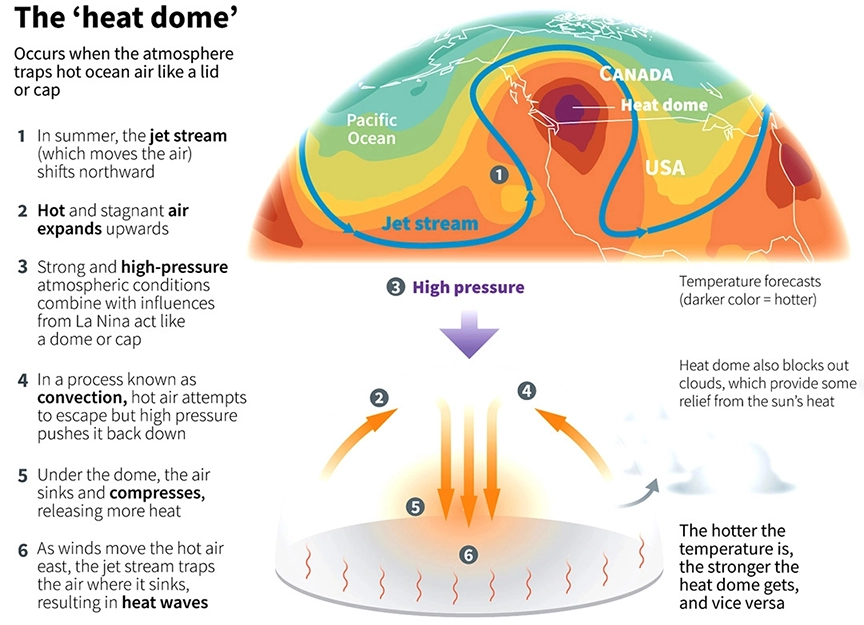
A heat dome is a weather phenomenon where a strong high-pressure system traps hot air over a large area, preventing it from escaping. This trapped heat continues to build day after day, leading to extreme temperatures.
The name “heat dome” comes from the way the high-pressure system acts like a lid or dome, pressing warm air down toward the Earth’s surface.
Under normal weather conditions, warm air rises and cooler air moves in to replace it. But during a heat dome event, the high-pressure system prevents this natural circulation, allowing heat to accumulate.
As a result:
-
Daytime temperatures climb rapidly
-
Nights remain unusually warm
-
Heat persists for long periods
This combination makes heat domes particularly dangerous.
How a Heat Dome Forms
Heat domes form through a combination of atmospheric pressure patterns and ocean temperature influences. The process typically happens in several stages.
1. Development of a High-Pressure System
A heat dome begins when a large high-pressure system develops in the upper atmosphere. High pressure pushes air downward toward the surface.
When air is compressed as it sinks, it warms up. This process is known as compressional heating.
The downward pressure also prevents clouds from forming, allowing more sunlight to reach the ground.
2. Heat Gets Trapped Near the Surface
Because the high-pressure system blocks air circulation, the hot air becomes trapped in one place.
Instead of moving away or mixing with cooler air, the heat accumulates each day, making temperatures steadily rise.
The trapped heat behaves similarly to how heat builds up inside a greenhouse.
3. Clear Skies Increase Heating
High-pressure systems usually produce clear skies and calm winds.
These conditions allow sunlight to heat the ground intensely during the day. The land then releases heat into the surrounding air, raising temperatures further.
Without cloud cover to reflect sunlight or winds to disperse the heat, the warming continues.
4. Heat Builds Day After Day
One of the most dangerous aspects of a heat dome is its persistence.
Because the atmospheric pattern remains stable, the trapped heat continues building for several days or weeks.
Over time, temperatures may reach extreme levels, especially in urban areas where heat is already amplified by buildings and asphalt.
Why Heat Domes Cause Dangerous Temperatures
Heat domes can lead to record-breaking temperatures and prolonged heatwaves. Several factors contribute to their dangerous effects.
Continuous Heat Accumulation
Since the heat cannot escape, temperatures increase every day.
For example, a region experiencing a heat dome may see temperatures rise from 35°C to 45°C within a few days.
This prolonged exposure increases the risk of heat-related illnesses.
Very Warm Nights
Normally, temperatures drop at night, allowing the body and environment to cool down.
But during a heat dome, nighttime temperatures remain unusually high.
This prevents buildings, roads, and even the human body from cooling properly, making heatwaves much more dangerous.
Urban Heat Island Effect
Cities are particularly vulnerable during heat domes because of the urban heat island effect.
Concrete, asphalt, and buildings absorb heat during the day and release it slowly at night.
This means urban areas can be 5–10°C hotter than surrounding rural areas, intensifying the impact of a heat dome.
Increased Humidity in Some Regions
In certain regions, heat domes also trap moisture, increasing humidity levels.
High humidity makes the body feel even hotter because sweat evaporates more slowly.
This raises the heat index, which measures how hot it actually feels.
Recent Examples of Heat Domes
Heat domes have caused several historic heatwaves around the world.
North America Heat Dome (2021)
One of the most famous examples occurred in 2021, when a massive heat dome formed over western North America.
Temperatures reached:
-
49.6°C in Canada
-
Over 45°C in several U.S. states
This event led to hundreds of heat-related deaths and widespread wildfires.
Europe Heatwaves
Europe has also experienced multiple heat dome events in recent years.
Countries such as Spain, Italy, and France recorded temperatures above 40°C, causing severe droughts and strain on energy systems.
South Asia Heatwaves
India and Pakistan frequently experience heat dome-like conditions during summer.
Temperatures can exceed 45°C, creating dangerous conditions for outdoor workers and vulnerable populations.
Health Risks of Heat Domes
Extreme heat can pose serious health risks, especially when it lasts for several days.
Common heat-related illnesses include:
Heat Exhaustion
Symptoms may include:
-
Heavy sweating
-
Dizziness
-
Headache
-
Nausea
-
Fatigue
If untreated, heat exhaustion can lead to more severe conditions.
Heat Stroke
Heat stroke is a medical emergency and occurs when the body cannot regulate its temperature.
Symptoms include:
-
Body temperature above 40°C
-
Confusion
-
Rapid heartbeat
-
Loss of consciousness
Immediate medical attention is required.
Dehydration
High temperatures increase the body’s fluid loss through sweating.
Without adequate hydration, dehydration can occur quickly, especially for children and elderly individuals.
Environmental and Economic Impacts
Heat domes affect more than just human health. They also impact the environment and economy.
Agriculture Damage
Extreme heat can damage crops, reduce yields, and dry out soil.
Farmers may face significant financial losses during prolonged heatwaves.
Increased Energy Demand
During heat domes, millions of people rely on air conditioning to stay cool.
This dramatically increases electricity demand and can strain power grids.
Wildfire Risk
Hot, dry conditions increase the likelihood of wildfires.
Many of the largest wildfires in recent years have occurred during intense heat dome events.
How to Stay Safe During a Heat Dome
When a heat dome develops, taking proper precautions is essential.
Stay Hydrated
Drink plenty of water throughout the day, even if you do not feel thirsty.
Avoid excessive caffeine or alcohol, which can increase dehydration.
Avoid Peak Heat Hours
Limit outdoor activities between 12 PM and 4 PM, when temperatures are highest.
If you must go outside, wear lightweight clothing and use sun protection.
Keep Indoor Spaces Cool
Use fans, air conditioning, or cooling centers to reduce indoor temperatures.
Closing curtains during the day can also help block sunlight.
Check on Vulnerable Individuals
Elderly people, children, and those with medical conditions are particularly vulnerable to extreme heat.
Checking on neighbors and family members during heatwaves can help prevent serious health issues.
Will Heat Domes Become More Common?
Many scientists believe that climate change may increase the frequency and intensity of heat domes.
Rising global temperatures make it easier for extreme heat events to occur and persist.
As a result, regions around the world may experience more frequent and severe heatwaves in the coming decades.
Understanding how heat domes work can help communities prepare and reduce their impacts.
Conclusion
Heat domes are powerful weather patterns that trap hot air under a high-pressure system, creating prolonged and dangerous heatwaves. By preventing heat from escaping and allowing temperatures to build day after day, they can lead to record-breaking temperatures, health risks, and environmental damage.
As climate patterns continue to change, understanding heat domes and taking precautions during extreme heat events will become increasingly important for protecting both people and ecosystems.
FAQ
What is a heat dome in simple terms?
A heat dome is a weather pattern where a high-pressure system traps hot air over a region, causing temperatures to rise and remain high for several days or weeks.
How long can a heat dome last?
Heat domes can last anywhere from a few days to several weeks, depending on how long the high-pressure system remains in place.
Are heat domes the same as heatwaves?
Not exactly. A heat dome is the atmospheric condition that often causes a heatwave, while a heatwave refers to the period of extremely hot weather experienced at the surface.
Which regions experience heat domes most often?
Heat domes commonly occur in North America, Europe, South Asia, and Australia during the summer months.
Can climate change increase heat domes?
Many scientists believe that climate change may increase the intensity and frequency of heat domes by raising overall global temperatures.