Hurricanes and cyclones are among the most powerful storms on Earth. These massive weather systems can bring extreme winds, heavy rainfall, flooding, and coastal storm surges that affect millions of people. While they may appear suddenly in news reports, hurricanes and cyclones actually take several days to develop over warm ocean waters.
Understanding how these storms form helps scientists predict their movement and strength, giving communities time to prepare. In this guide, we will explain the step-by-step process of how hurricanes and cyclones develop and what conditions allow them to grow into powerful storms.
What Is the Difference Between Hurricanes and Cyclones?
Many people think hurricanes and cyclones are different types of storms, but they are actually the same weather phenomenon. The only difference is the region where they occur.
-
Hurricanes occur in the Atlantic Ocean and eastern Pacific Ocean.
-
Cyclones form in the Indian Ocean and South Pacific.
-
Typhoons develop in the northwestern Pacific Ocean.
Despite the different names, all of these storms are tropical cyclones, meaning they form in warm tropical waters and rotate around a central low-pressure system.
Conditions Needed for Hurricanes and Cyclones to Form
Before a hurricane or cyclone can develop, several atmospheric conditions must be present.
1. Warm Ocean Water
Warm ocean water is the main fuel for tropical storms. Typically, the ocean surface temperature must be at least 26–27°C (79–81°F).
Warm water evaporates into the atmosphere, creating moist air that powers storm clouds.
2. Low Atmospheric Pressure
Storms form in areas where the air pressure near the surface is lower than surrounding areas. This allows warm air to rise and form storm clouds.
As air rises, more air rushes in to fill the low-pressure area, helping the storm grow stronger.
3. Moist Air in the Atmosphere
Moist air provides energy for storm formation. When moist air rises and cools, it forms clouds and releases heat, which strengthens the storm system.
4. Low Wind Shear
Wind shear refers to changes in wind speed or direction at different heights in the atmosphere.
For a hurricane to develop, wind shear must be low. Strong wind shear can tear storms apart before they fully develop.
5. Distance from the Equator
Hurricanes and cyclones rarely form directly at the equator. They usually develop at least 5 degrees north or south of the equator.
This is because the Earth’s rotation creates the Coriolis effect, which causes storms to spin.
Step-by-Step Process of Hurricane and Cyclone Formation
Tropical storms go through several stages before becoming full-strength hurricanes or cyclones.
Step 1: Tropical Disturbance
The process begins with a tropical disturbance, which is a cluster of thunderstorms over warm ocean waters.
At this stage:
-
Clouds begin to gather
-
Thunderstorms develop
-
Warm moist air rises from the ocean
Many tropical disturbances disappear quickly, but some continue to grow stronger.
Step 2: Tropical Depression
If the storm system becomes more organized and wind speeds increase, it may develop into a tropical depression.
Characteristics of a tropical depression include:
-
Wind speeds below 63 km/h (39 mph)
-
Organized storm clouds
-
Low pressure at the center of the storm
Meteorologists begin monitoring the storm closely at this stage.
Step 3: Tropical Storm
When wind speeds reach 63–118 km/h (39–73 mph), the storm becomes a tropical storm.
At this point:
-
The storm receives an official name
-
Strong rainbands develop
-
Winds intensify around the storm center
The storm begins forming a circular structure and grows larger.
Step 4: Hurricane or Cyclone
When sustained wind speeds reach 119 km/h (74 mph) or higher, the storm becomes a hurricane or cyclone.
Key features appear during this stage.
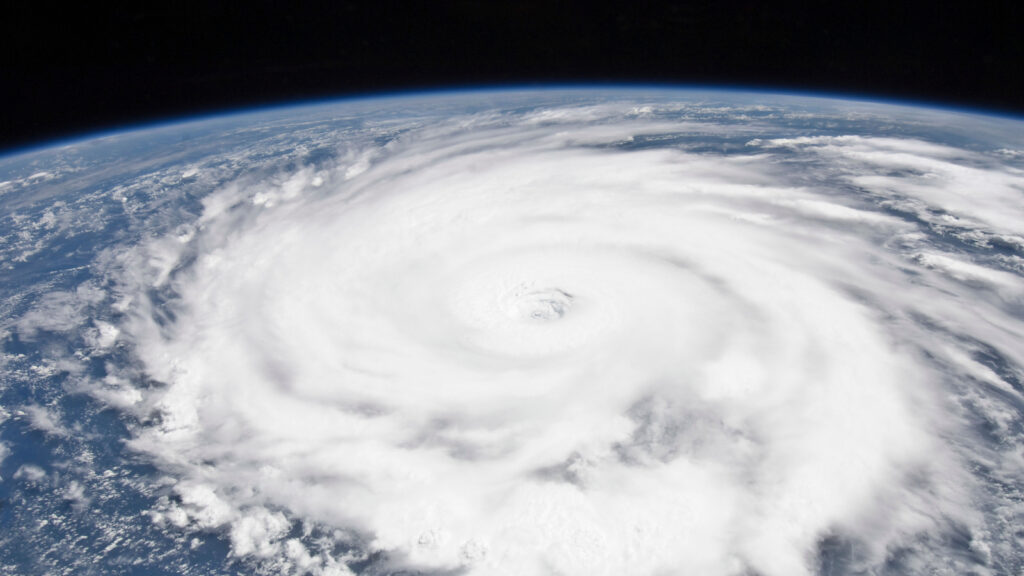
The Eye
The eye is the calm center of the storm. Surprisingly, the weather inside the eye is often clear and calm.
The Eyewall
Surrounding the eye is the eyewall, which contains the strongest winds and heaviest rainfall.
Spiral Rainbands
These are curved bands of clouds and thunderstorms extending outward from the storm center.
These rainbands can bring heavy rainfall hundreds of kilometers away from the storm’s center.
Why Hurricanes Spin
Hurricanes rotate because of the Coriolis effect, which is caused by the Earth’s rotation.
-
In the Northern Hemisphere, storms spin counterclockwise.
-
In the Southern Hemisphere, storms spin clockwise.
This rotation allows the storm to organize into the spiral pattern commonly seen in satellite images.
What Makes Hurricanes Stronger?
Several factors can cause hurricanes or cyclones to intensify rapidly.
Warm Ocean Water
The warmer the ocean, the more energy the storm can absorb.
Deep Warm Water
If warm water extends deep below the surface, storms can strengthen faster.
Moist Atmosphere
High humidity allows storm clouds to grow taller and stronger.
Low Wind Shear
Low wind shear allows the storm structure to remain intact.
When all these conditions are favorable, hurricanes can rapidly intensify within a short time.
How Hurricanes Lose Strength
Eventually, hurricanes weaken due to several factors.
Landfall
When hurricanes move over land, they lose access to warm ocean water, their primary energy source.
Cooler Ocean Water
Moving over colder water reduces the energy available for storm growth.
Strong Wind Shear
Strong winds at different atmospheric levels can disrupt the storm structure.
These factors cause hurricanes to gradually weaken and eventually dissipate.
Impacts of Hurricanes and Cyclones
Hurricanes can cause significant damage due to multiple hazards.
Strong Winds
Winds can exceed 250 km/h (155 mph) in powerful storms, damaging buildings and infrastructure.
Heavy Rainfall
Hurricanes can produce massive rainfall leading to flooding and landslides.
Storm Surge
Storm surge is the rise of seawater pushed inland by strong winds. It is often the most dangerous aspect of hurricanes.
Tornadoes
Some hurricanes can produce tornadoes when they make landfall.
Regions Most Affected by Hurricanes and Cyclones
Different parts of the world experience tropical cyclones depending on ocean temperatures and weather patterns.
Common regions include:
-
Atlantic Ocean (Caribbean and Gulf of Mexico)
-
Western Pacific (Japan, Philippines, China)
-
Indian Ocean (India, Bangladesh)
-
South Pacific (Australia, Fiji)
These storms usually occur during warm ocean seasons, typically from late spring to early autumn.
Why Tracking Hurricanes Is Important
Modern weather technology helps scientists track hurricanes days before they reach land.
Meteorologists use:
-
Weather satellites
-
Radar systems
-
Ocean buoys
-
Computer weather models
These tools help predict storm paths and intensity, allowing authorities to issue warnings and evacuations when necessary.
Early warnings save thousands of lives every year.
Frequently Asked Questions (FAQ)
What causes hurricanes and cyclones to form?
Hurricanes and cyclones form over warm ocean water when moist air rises and creates a low-pressure system that begins rotating due to the Earth’s rotation.
What is the minimum wind speed for a hurricane?
A tropical storm becomes a hurricane when sustained wind speeds reach 119 km/h (74 mph) or higher.
Why do hurricanes have an eye?
The eye forms because air sinks at the center of the storm, creating calmer weather surrounded by the intense winds of the eyewall.
Can hurricanes form anywhere in the ocean?
No. Hurricanes usually form in tropical regions where ocean temperatures are warm enough and atmospheric conditions are favorable.
What is the most dangerous part of a hurricane?
The most dangerous parts are typically the storm surge and eyewall, where the strongest winds and heaviest rainfall occur.