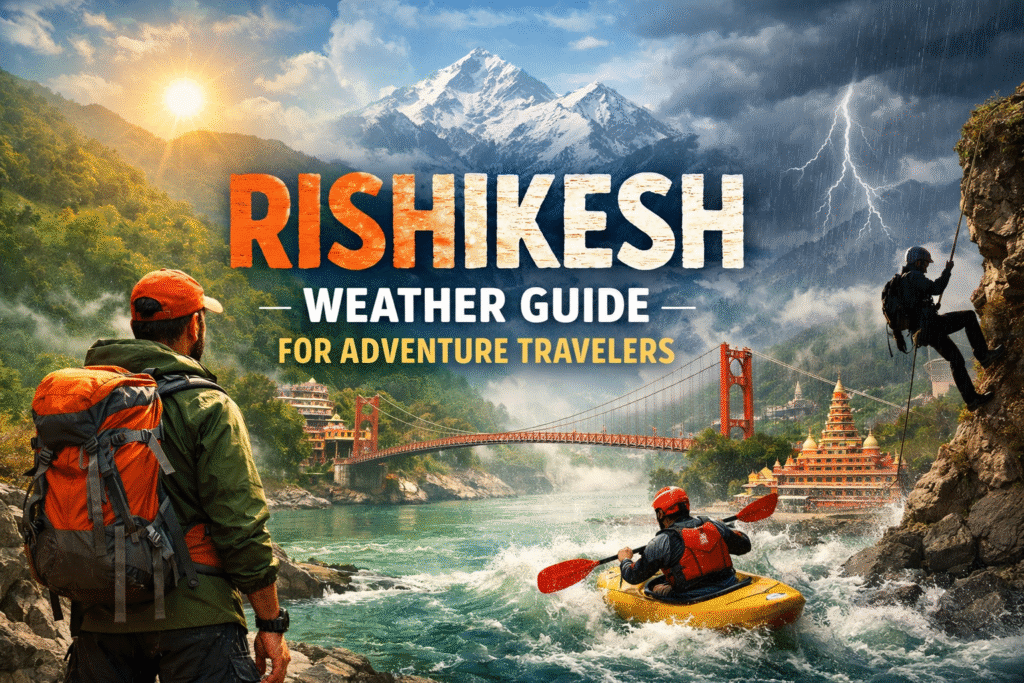
Nestled in the foothills of the Himalayas along the sacred Ganges River, Rishikesh is widely known as India’s adventure capital. From white-water rafting and cliff jumping to trekking, camping, bungee jumping, and yoga retreats, this vibrant town attracts thrill-seekers from across the world.
However, adventure in Rishikesh is deeply influenced by seasonal weather patterns. River currents, temperature shifts, rainfall intensity, and visibility all impact the kind of experience you’ll have. Planning your trip according to the weather can make the difference between a good adventure and an unforgettable one.
This detailed guide covers Rishikesh weather season by season so you can choose the best time for your adventure.
Understanding Rishikesh’s Climate
Rishikesh has a subtropical climate influenced by the Himalayan foothills. The year is divided into four main seasons:
-
Spring (March–April)
-
Summer (May–June)
-
Monsoon (July–September)
-
Winter (October–February)
Each season offers a distinct adventure experience.
Spring in Rishikesh (March to April)
Weather Overview
Spring is one of the most pleasant times to visit. Temperatures typically range between 15°C to 30°C. Days are warm and comfortable, while evenings remain cool and refreshing.
Why Spring Is Ideal for Adventure
This period marks the beginning of peak rafting season. Snow begins melting in higher Himalayan regions, increasing the Ganges’ water flow and creating exciting rapids without extreme danger levels.
Best Activities
-
White-water rafting
-
Cliff jumping
-
Riverside camping
-
Short Himalayan treks
-
Bungee jumping
-
Mountain biking
Clear skies and dry trails make it excellent for outdoor exploration.
Packing Tips
-
Light cotton clothes
-
Light jacket for evenings
-
Sunglasses and sunscreen
-
Comfortable trekking shoes
Best For: First-time adventure travelers and balanced weather lovers.
Summer in Rishikesh (May to June)
Weather Overview
Summer temperatures range from 25°C to 40°C. May can be quite hot, especially during midday.
What Makes Summer Popular
Despite the heat, this is peak tourist season. The Ganges remains refreshingly cold, making rafting and water activities incredibly enjoyable.
Best Activities
-
Rafting (most popular time)
-
Kayaking
-
River camping
-
Early morning treks
-
Ziplining
Longer daylight hours mean more time for adventure.
Things to Keep in Mind
-
Avoid outdoor activities during peak afternoon heat (12 PM–4 PM).
-
Stay hydrated.
-
Wear protective clothing.
Packing Tips
-
Breathable clothing
-
High-SPF sunscreen
-
Hat or cap
-
Water bottle
Best For: Water sports enthusiasts and adrenaline seekers.
Monsoon in Rishikesh (July to September)
Weather Overview
Temperatures range between 24°C to 35°C, with heavy rainfall throughout the season.
Important Adventure Note
Rafting is usually suspended during peak monsoon due to high water levels and strong currents. Safety regulations strictly prohibit water-based activities when conditions are risky.
What You Can Still Do
-
Explore waterfalls
-
Enjoy nature photography
-
Visit yoga and meditation retreats
-
Relax at riverside cafés
-
Short, safe nature walks
The landscape becomes lush green and incredibly scenic, but trekking routes may become slippery and prone to landslides.
Who Should Visit During Monsoon?
-
Budget travelers
-
Nature lovers
-
Spiritual seekers
-
Content creators seeking dramatic scenery
Packing Tips
-
Waterproof jacket
-
Anti-slip footwear
-
Quick-dry clothes
-
Mosquito repellent
Best For: Scenic beauty and peaceful retreats rather than intense adventure.
Winter in Rishikesh (October to February)
Weather Overview
Temperatures range between 8°C to 25°C. December and January are the coldest months.
Why Winter Is Special
Winter brings clear skies, crisp air, and breathtaking mountain views. Rafting continues with wetsuits provided, making cold-water rafting an exciting experience.
Best Activities
-
Rafting (with safety gear)
-
Trekking
-
Rock climbing
-
Bonfire camping
-
Yoga festivals
Dry weather makes trekking routes stable and safe.
What Makes Winter Appealing
-
Fewer crowds than summer
-
Clear sunrise and sunset views
-
Comfortable daytime temperatures
-
Excellent photography conditions
Packing Tips
-
Thermal innerwear
-
Warm jackets
-
Woolen caps and gloves
-
Layered clothing
Best For: Balanced adventure and comfortable weather.
Best Time for Specific Adventure Activities
Rafting
Best from March to June and October to early December. Avoid peak monsoon.
Trekking
Best from October to April. Avoid heavy rainfall months.
Camping
Ideal during Spring, Summer evenings, and Early Winter.
Bungee Jumping & Ziplining
Available almost year-round except during extreme weather days.
Month-by-Month Adventure Snapshot
-
January: Cold but clear; excellent for trekking.
-
February: Pleasant and adventurous.
-
March: Ideal weather begins.
-
April: Warm and exciting rapids.
-
May: Hot but perfect for rafting.
-
June: Warm and slightly humid.
-
July: Heavy rains; limited adventure.
-
August: Continued rainfall; rafting closed.
-
September: Rain reduces; greenery at peak.
-
October: Cool and clear; excellent for all activities.
-
November: Crisp air and ideal trekking weather.
-
December: Cold mornings; beautiful skies.
Pro Travel Tips for Adventure Seekers
-
Always confirm rafting availability before booking.
-
Choose certified and licensed operators.
-
Carry valid ID for activity registration.
-
Avoid alcohol before adventure sports.
-
Check weather forecasts before trekking.
-
Book in advance during peak seasons (April–June).
Final Thoughts
Rishikesh offers a different kind of thrill in every season. If you crave high-energy water sports, spring and summer are ideal. If you prefer clear skies and comfortable exploration, winter is your best bet. And if scenic beauty and peaceful vibes matter most, monsoon offers unmatched greenery and serenity.
Choosing the right season ensures your adventure is safe, enjoyable, and unforgettable. Plan smart, respect nature, and let Rishikesh deliver the adrenaline rush you’re seeking.
Frequently Asked Questions (FAQs)
1. What is the best month for rafting in Rishikesh?
March, April, and October are considered the best months due to ideal water flow and comfortable temperatures.
2. Is rafting completely closed during monsoon?
Yes, rafting is typically suspended between July and early September for safety reasons.
3. Is winter too cold for rafting?
No. Wetsuits are provided, and winter rafting can be thrilling with clear weather conditions.
4. How hot does Rishikesh get in summer?
Temperatures can reach up to 40°C in May and June, especially during midday.
5. Is trekking safe during monsoon?
Trekking can be risky due to slippery trails and possible landslides. It’s advisable to avoid challenging routes.
6. Which season has the least crowd?
Monsoon (July–September) usually sees fewer tourists.
7. What should I pack for a winter adventure trip?
Thermals, warm jackets, gloves, sturdy shoes, and layered clothing are recommended.