Planning a trip to Tokyo? One of the most important factors in shaping your experience is the weather. From cherry blossom spring mornings to humid summer festivals and crisp autumn evenings, Tokyo transforms dramatically across the seasons.
This complete year-round weather guide will help you understand what to expect each season — so you can plan smarter, pack right, and make the most of your visit.
Overview of Tokyo’s Climate
Tokyo has a humid subtropical climate, meaning:
- Distinct four seasons
- Hot, humid summers
- Cool winters
- Rainfall throughout the year
- A defined rainy season in early summer
Average Annual Temperatures:
- Winter: 2°C–12°C (36°F–54°F)
- Spring: 8°C–22°C (46°F–72°F)
- Summer: 22°C–35°C (72°F–95°F)
- Autumn: 10°C–24°C (50°F–75°F)
Now let’s break it down season by season.
🌸 Spring (March – May)
Spring is one of the most popular times to visit Tokyo — and for good reason.
Weather Conditions
- Mild temperatures
- Low humidity
- Increasing sunshine
- Occasional light rain
March can still feel chilly, but April and May are beautifully comfortable.
Cherry Blossom Season
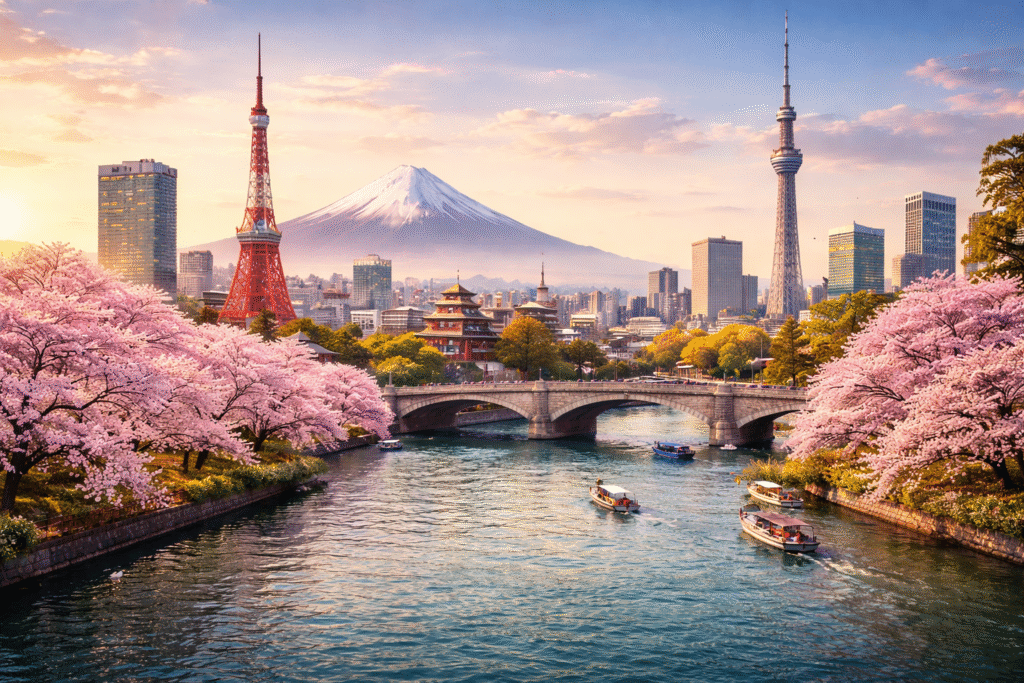
Late March to early April marks sakura season, when cherry blossoms bloom across the city — especially in places like Ueno Park.
It’s one of the most iconic times to visit, but also one of the busiest.
Why Spring Is Ideal
- Perfect walking weather
- Clear skies
- Vibrant city atmosphere
- Outdoor festivals
Best month: April — comfortable temperatures and full bloom beauty.
☀️ Summer (June – August)
Tokyo summers are intense — hot, humid, and energetic.
June – Rainy Season (Tsuyu)
June marks the beginning of the rainy season:
- Frequent cloudy days
- Light to moderate rainfall
- Sticky humidity
It’s not constant heavy rain, but showers can be regular.
July & August – Heat and Festivals
- Temperatures often exceed 30°C (86°F)
- High humidity
- Occasional typhoons late August
Despite the heat, summer is lively. Festivals and fireworks displays light up areas like Sumida River.
Things to Know
- Air conditioning is common indoors
- Outdoor sightseeing can be exhausting
- Hydration is essential
Best summer month: Early July (before peak humidity).
🍁 Autumn (September – November)
Autumn is considered by many travelers to be the best time to visit Tokyo.
Weather Conditions
- Cooler temperatures
- Lower humidity
- Clear blue skies
- Beautiful fall foliage
September can still be warm and occasionally affected by typhoons, but October and November are stunning.
Fall Colors
Parks and gardens, including Shinjuku Gyoen, turn red and gold in November.
Why Autumn Is Perfect
- Comfortable sightseeing weather
- Fewer crowds than spring
- Crisp, photogenic days
Best month: November — cool, dry, and scenic.
❄️ Winter (December – February)
Winter in Tokyo is cold but surprisingly manageable.
Weather Conditions
- Dry air
- Clear skies
- Minimal snowfall
- Cold mornings and evenings
Daytime temperatures often remain above freezing.
Winter Atmosphere
Illuminations light up shopping districts and landmarks like Tokyo Tower, creating a magical evening vibe.
Pros of Visiting in Winter
- Fewer tourists
- Lower hotel prices (excluding New Year)
- Clear views of Mount Fuji on crisp days
Cons
- Short daylight hours
- Cold evenings
Best winter month: December (for festive lights without peak cold).
Rainfall & Typhoon Season
Tokyo receives rainfall throughout the year, but two periods stand out:
- June (Rainy Season)
- Late August–September (Typhoon Season)
Typhoons don’t hit constantly, but they can disrupt travel plans briefly. Always monitor forecasts if traveling in late summer.
Month-by-Month Quick Summary
January: Cold, dry, clear skies
February: Cool, least crowded
March: Early spring, blossom anticipation
April: Peak cherry blossom season
May: Warm and comfortable
June: Rainy season begins
July: Hot and humid
August: Hottest month, festival season
September: Cooling slightly, typhoon risk
October: Pleasant and crisp
November: Best fall colors
December: Cool, festive atmosphere
Best Time to Visit Tokyo Overall
It depends on what you prioritize:
- 🌸 Cherry blossoms → Late March to early April
- ☀️ Festivals and nightlife → July & August
- 🍁 Perfect weather → October & November
- 💰 Budget travel → January & February
For most travelers, April and November offer the best overall balance of weather, scenery, and comfort.
What to Pack by Season
Spring
- Light jacket
- Comfortable walking shoes
- Layered clothing
Summer
- Breathable clothing
- Hat and sunglasses
- Cooling towel
- Umbrella (for sudden showers)
Autumn
- Light coat
- Sweater
- Scarf for evenings
Winter
- Warm coat
- Gloves
- Thermal layers
Tokyo involves a lot of walking — comfortable footwear is essential year-round.
Is Tokyo Weather Extreme?
Not typically.
- Summers can feel intensely humid.
- Winters are cold but rarely harsh.
- Snow is uncommon and usually light.
Tokyo’s climate is seasonal but manageable compared to many global cities.
Final Thoughts: When Should You Go?
If you want iconic beauty and mild temperatures → Visit in April.
If you want crisp air and stunning foliage → Choose November.
If you prefer fewer crowds and lower prices → January or February.
Tokyo shines in every season — you just need to align your visit with your comfort level and travel goals.
Frequently Asked Questions (FAQ)
1. What is the best season to visit Tokyo?
Spring (March–May) and Autumn (October–November) are generally considered the best seasons due to mild weather and scenic beauty.
2. Is Tokyo too hot in summer?
It can be very humid and hot, especially in July and August. Outdoor sightseeing can feel intense.
3. Does Tokyo get snow?
Snowfall is rare and usually light. It doesn’t significantly impact travel.
4. When is cherry blossom season in Tokyo?
Typically late March to early April, though timing varies slightly each year.
5. Is typhoon season dangerous?
Typhoons can cause heavy rain and strong winds, mainly in late summer. They are monitored closely, and disruptions are usually short-term.
6. Is winter a good time to visit Tokyo?
Yes. It’s less crowded, hotel prices are lower, and skies are often clear.
7. How many days are ideal for Tokyo?
4–6 days allows you to explore major neighborhoods, cultural sites, shopping districts, and nearby day trips comfortably.
No matter when you visit, Tokyo offers a unique blend of tradition, technology, and seasonal beauty. Understanding the weather helps you experience the city at its absolute best. 🇯🇵✨