Fog is one of the most fascinating weather phenomena we experience. It can turn a familiar landscape mysterious, reduce visibility on roads, and create beautiful early-morning scenery. But fog is more than just misty air—it’s actually a type of cloud that forms very close to the ground.
Understanding what causes fog and why it appears more often in certain places can help us better appreciate how the atmosphere works. In this guide, we’ll explore how fog forms, the conditions required for it to develop, and why some regions experience fog more frequently than others.
What Is Fog?
Fog is essentially a cloud that forms at ground level. It consists of tiny water droplets or ice crystals suspended in the air. These droplets are so small that they remain floating rather than falling like rain.
Meteorologists usually define fog as a condition where visibility drops below 1 kilometer (0.62 miles) due to these suspended droplets.
Fog often appears:
-
Early in the morning
-
During cool and calm weather
-
Near bodies of water
-
In valleys and low-lying areas
When the droplets become thicker and visibility improves slightly, it may instead be classified as mist rather than fog.
How Fog Forms
Fog forms when water vapor in the air condenses into tiny liquid droplets. This happens when the air becomes saturated, meaning it can no longer hold all the moisture it contains.
There are two main ways this can occur:
1. Cooling of Air
When air cools down to its dew point temperature, it can no longer hold as much moisture. The excess water vapor condenses into tiny droplets, creating fog.
This cooling can happen due to:
-
Nighttime temperature drops
-
Cold surfaces cooling nearby air
-
Cold air moving over warm moist areas
2. Increase in Moisture
Sometimes fog forms because the air becomes more humid, not because the temperature drops. When enough moisture enters the air, saturation occurs and droplets form.
This often happens when:
-
Warm air passes over water
-
Evaporation adds moisture to the air
-
Rain increases humidity near the ground
Types of Fog
Meteorologists classify fog into several types depending on how it forms.
Radiation Fog
Radiation fog is the most common type of fog.
It forms during clear nights when the ground loses heat quickly. As the ground cools, the air near it also cools until condensation occurs.
Characteristics of radiation fog:
-
Forms overnight
-
Common in valleys and rural areas
-
Usually disappears after sunrise
This is why foggy mornings are common in many regions.
Advection Fog
Advection fog forms when warm moist air moves over a colder surface.
The cooler surface lowers the temperature of the air, causing water vapor to condense into fog.
This type is common near:
-
Coastal areas
-
Cold ocean currents
-
Snow-covered land
Coastal cities often experience advection fog when warm ocean air moves over cold water.
Valley Fog
Valley fog occurs when cold air sinks into valleys during the night.
Cold air is heavier than warm air, so it flows downhill and collects in low areas. Moisture in this trapped air condenses, producing thick fog.
Valley fog is common in mountainous regions and river valleys.
Evaporation Fog
Evaporation fog forms when cold air moves over warm water.
The warmer water evaporates into the cold air above it, adding moisture. When the air becomes saturated, fog forms.
This type is often seen over:
-
Lakes
-
Rivers
-
Oceans during cold mornings
It is sometimes called steam fog because it can look like steam rising from the water.
Why Fog Forms in Certain Areas More Often
Not all locations experience fog equally. Some places are much more prone to fog due to their geography and climate.
Here are the main reasons certain areas see more fog.
1. Presence of Water Bodies
Areas near lakes, rivers, and oceans tend to experience more fog because water increases moisture in the air.
For example:
-
Coastal regions
-
Lakeside cities
-
River valleys
The extra humidity makes it easier for condensation to occur.
2. Low-Lying Terrain
Valleys and basins often trap cool air overnight. When cold air settles in these areas, fog forms easily.
This is why mountain valleys frequently experience morning fog.
Cities located in valleys may see fog linger longer than areas at higher elevations.
3. Calm Winds
Fog forms best when winds are light or calm.
Strong winds mix the air and prevent condensation from concentrating near the ground.
Calm conditions allow moisture to gather and form dense fog.
4. Clear Night Skies
Clear skies allow heat to escape quickly from the Earth’s surface during the night.
As the ground cools, the air above it cools as well. When it reaches the dew point, fog forms.
This is why fog often appears after cool, clear nights.
5. Seasonal Weather Patterns
Some seasons naturally create better conditions for fog formation.
For example:
-
Autumn and winter often produce more fog due to cooler nights and higher humidity.
-
In many regions, fog is most common during early mornings in these seasons.
Seasonal temperature changes influence how quickly air reaches saturation.
Why Fog Is More Common in the Morning
Morning fog is common because temperatures typically drop overnight.
During the night:
-
The ground cools.
-
The air near the surface cools as well.
-
Moisture condenses into droplets.
Once the sun rises, sunlight warms the ground again. The warmer air can hold more moisture, causing fog to gradually evaporate and disappear.
This is why fog usually clears by mid-morning.
Effects of Fog on Daily Life
Fog can affect many aspects of daily life, especially transportation and safety.
Reduced Visibility
Fog significantly reduces visibility, which can create dangerous driving conditions.
Drivers should:
-
Use low-beam headlights
-
Drive slowly
-
Maintain safe distances
Travel Delays
Airports often delay flights during heavy fog because pilots need clear visibility for safe takeoffs and landings.
Road traffic can also slow down in foggy conditions.
Beautiful Natural Landscapes
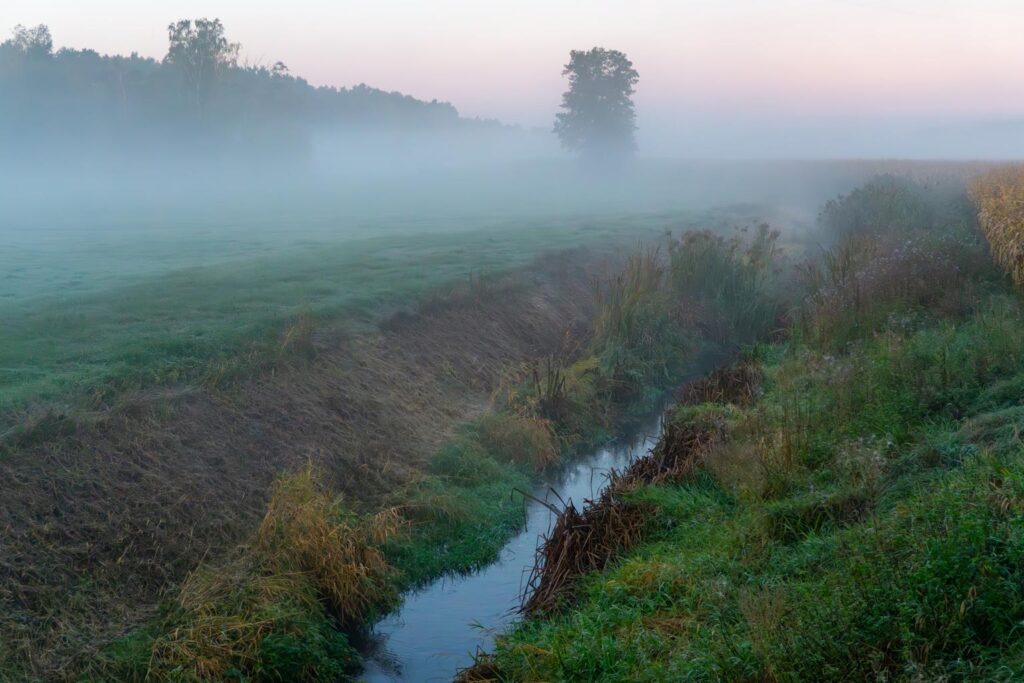
Despite its challenges, fog can also create stunning natural scenes. Foggy landscapes often appear dramatic and peaceful, especially in forests, mountains, and lakeside areas.
Photographers frequently seek out fog for its ability to add depth and atmosphere to images.
Can Fog Be Predicted?
Yes, meteorologists can often predict fog using weather models and atmospheric data.
Forecasts look at factors such as:
-
Temperature
-
Humidity
-
Wind speed
-
Cloud cover
-
Dew point
When these conditions align, weather forecasts may issue fog advisories to warn travelers and drivers.
Conclusion
Fog is a natural weather phenomenon that forms when air near the ground becomes saturated and water vapor condenses into tiny droplets. It typically occurs during cool, calm conditions and is most common near water bodies, valleys, and low-lying terrain.
Different types of fog—such as radiation fog, advection fog, and evaporation fog—develop under different atmospheric conditions. While fog can reduce visibility and disrupt travel, it also plays an important role in the Earth’s weather system and can create breathtaking landscapes.
By understanding how fog forms and why it occurs more often in certain places, we can better appreciate the complex processes happening in our atmosphere every day.
Frequently Asked Questions (FAQs)
What is the main cause of fog?
Fog forms when warm, moist air cools to the dew point, causing water vapor to condense into tiny droplets suspended in the air.
Why is fog common in valleys?
Cold air sinks into valleys during the night. When this air cools and moisture condenses, fog forms and often becomes trapped in the low-lying area.
What is the difference between fog and mist?
The main difference is visibility. Fog reduces visibility to less than 1 kilometer, while mist allows visibility beyond that distance.
Why does fog usually disappear after sunrise?
Sunlight warms the ground and surrounding air, allowing the air to hold more moisture. This causes the fog droplets to evaporate.
Is fog dangerous for driving?
Yes, fog can significantly reduce visibility, making driving hazardous. Drivers should slow down, use low-beam headlights, and keep safe distances from other vehicles.