El Niño is one of the most powerful natural climate patterns on Earth. It originates in the Pacific Ocean but has the ability to influence weather across the entire planet. From intense rainfall and floods to droughts and heatwaves, El Niño plays a major role in shaping global climate conditions.
Understanding El Niño is important because it affects agriculture, water resources, ecosystems, and even economies worldwide. In this article, we’ll explore what El Niño is, why it happens, and how it influences weather patterns around the globe.
What Is El Niño?
El Niño is a climate phenomenon that occurs when sea surface temperatures in the central and eastern Pacific Ocean become warmer than normal. It is part of a larger climate cycle called the El Niño–Southern Oscillation (ENSO).
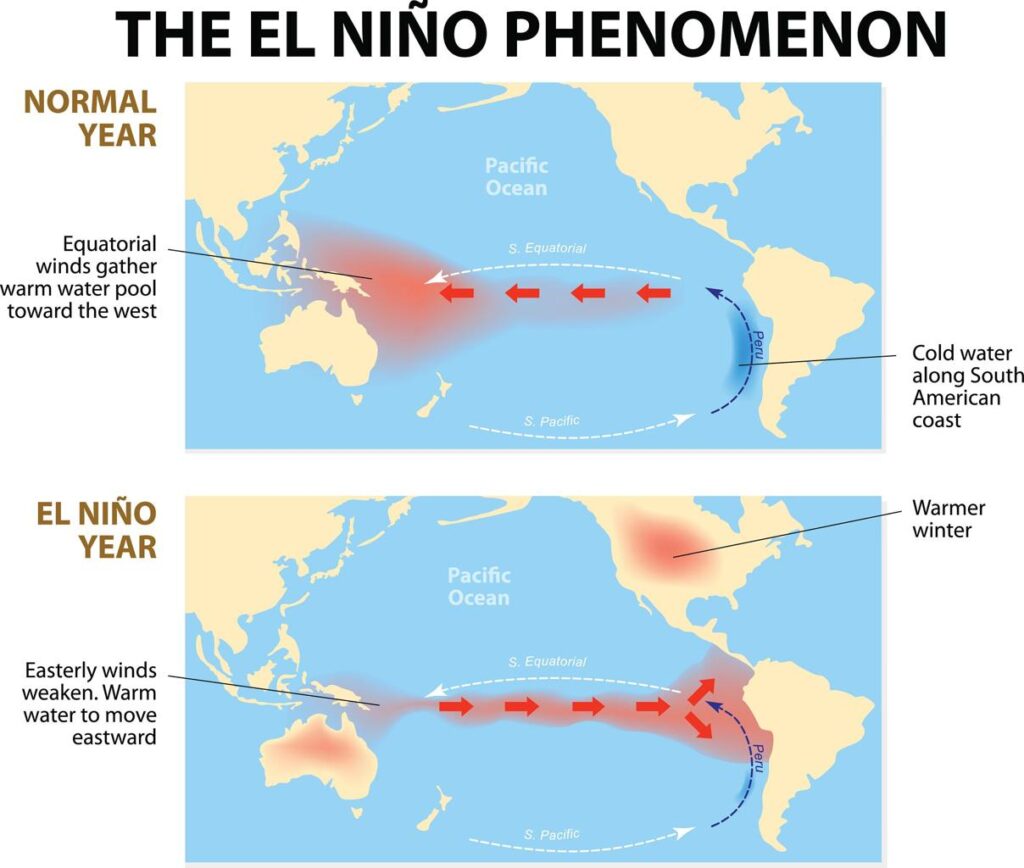
Normally, trade winds push warm surface water from South America toward Indonesia and Australia. This allows colder water to rise near the South American coast in a process called upwelling.
During an El Niño event:
-
Trade winds weaken or reverse
-
Warm water spreads eastward across the Pacific
-
Cold water upwelling decreases
-
Ocean temperatures rise significantly
This shift in ocean temperature disrupts atmospheric circulation and changes weather patterns around the world.
Why Is It Called El Niño?
The name El Niño comes from Spanish and means “The Little Boy” or “Christ Child.”
Peruvian fishermen first noticed this phenomenon centuries ago because it typically appeared around Christmas time. During El Niño years, warmer waters reduced fish populations along the South American coast, affecting local fishing industries.
Over time, scientists began studying the pattern and discovered that it influences weather across the entire globe.
How El Niño Forms
El Niño events occur due to a combination of ocean and atmospheric changes.
1. Weakening Trade Winds
Normally, strong trade winds push warm water westward toward Southeast Asia and Australia.
During El Niño, these winds weaken.
2. Warm Water Moves East
When winds weaken, warm water flows back toward the central and eastern Pacific Ocean.
3. Reduced Upwelling
Cold nutrient-rich water stops rising near the South American coast.
4. Ocean Temperatures Increase
Sea surface temperatures increase significantly in the Pacific.
5. Atmospheric Changes
Warmer ocean water changes air pressure patterns, influencing global weather systems.
These combined effects create the El Niño climate pattern.
How El Niño Affects Global Weather
Although El Niño begins in the Pacific Ocean, its effects can be felt worldwide. The phenomenon alters jet streams, storm tracks, and rainfall patterns.
Here are some common global impacts.
1. Heavy Rainfall and Flooding
Certain regions experience increased rainfall during El Niño.
Common areas affected include:
-
Western South America (Peru and Ecuador)
-
Southern United States
-
East Africa
Heavy rains can lead to floods, landslides, and infrastructure damage.
2. Drought in Some Regions
While some regions get more rain, others experience drought.
Areas commonly affected by drought include:
-
Australia
-
Indonesia
-
Parts of India
-
Southeast Asia
These droughts can damage crops, increase wildfire risk, and affect water supplies.
3. Warmer Global Temperatures
El Niño years are often among the warmest years on record globally.
The extra heat stored in the Pacific Ocean releases into the atmosphere, raising global average temperatures.
For example, several of the hottest recorded years occurred during strong El Niño events.
4. Changes in Storm Activity
El Niño also influences storm patterns worldwide.
Typical impacts include:
-
More winter storms in the southern United States
-
Fewer Atlantic hurricanes
-
Increased Pacific cyclone activity
These changes occur because El Niño alters wind patterns in the atmosphere.
5. Impact on Marine Life
El Niño can significantly affect marine ecosystems.
Reduced upwelling near South America means fewer nutrients in the water. This can lead to:
-
Declining fish populations
-
Disrupted food chains
-
Coral bleaching events
Fisheries that depend on nutrient-rich waters often suffer during strong El Niño events.
El Niño vs La Niña
El Niño has an opposite phase known as La Niña.
| Feature | El Niño | La Niña |
|---|---|---|
| Ocean Temperature | Warmer Pacific | Cooler Pacific |
| Trade Winds | Weaken | Strengthen |
| Rainfall in Australia | Decreases | Increases |
| Global Temperature | Warmer | Slightly Cooler |
Both phases are part of the ENSO climate cycle and occur every 2–7 years.
How Scientists Monitor El Niño
Meteorologists and climate scientists track El Niño using several tools.
Ocean Buoys
Hundreds of buoys across the Pacific measure ocean temperature, wind, and currents.
Satellites
Satellites monitor sea surface temperatures and atmospheric patterns.
Climate Models
Advanced computer models help predict when El Niño may develop and how strong it might become.
These technologies help governments prepare for potential climate impacts.
Historical El Niño Events
Several El Niño events have caused major global impacts.
1997–1998 El Niño
One of the strongest events ever recorded.
Impacts included:
-
Severe flooding in South America
-
Drought in Indonesia and Australia
-
Global economic losses exceeding billions of dollars
2015–2016 El Niño
Another extremely powerful event that led to:
-
Record global temperatures
-
Major coral bleaching events
-
Extreme weather worldwide
These events highlight how powerful El Niño can be.
Why El Niño Matters
El Niño influences many aspects of human life and natural systems.
Key impacts include:
Agriculture
Rainfall changes can affect crop production worldwide.
Water Supply
Droughts or floods may disrupt water availability.
Natural Disasters
El Niño can increase the risk of floods, landslides, and storms.
Global Economy
Weather disruptions affect food production, energy demand, and trade.
Because of these impacts, governments and scientists closely monitor El Niño events.
The Future of El Niño in a Changing Climate
Climate change may influence the frequency and strength of El Niño events.
Some scientists believe warming oceans could lead to:
-
More intense El Niño events
-
Stronger rainfall extremes
-
Increased climate variability
However, predicting the exact relationship between climate change and El Niño remains an active area of scientific research.
Conclusion
El Niño is a powerful climate phenomenon that begins in the Pacific Ocean but influences weather across the entire world. By warming ocean waters and altering atmospheric patterns, it can trigger floods, droughts, storms, and temperature changes across many continents.
Understanding El Niño helps scientists forecast climate patterns and prepare communities for potential impacts. As climate science continues to evolve, monitoring El Niño remains essential for predicting future weather and protecting ecosystems and economies worldwide.
Frequently Asked Questions (FAQs)
What is El Niño in simple terms?
El Niño is a climate pattern where the Pacific Ocean becomes warmer than normal, affecting global weather patterns such as rainfall, temperature, and storms.
How often does El Niño occur?
El Niño typically occurs every 2 to 7 years, though the timing and strength can vary.
How long does an El Niño event last?
Most El Niño events last 9 to 12 months, though some can continue for over a year.
Does El Niño cause global warming?
El Niño does not cause global warming, but it can temporarily increase global temperatures by releasing heat from the ocean into the atmosphere.
Which countries are most affected by El Niño?
Countries commonly affected include Peru, Ecuador, Australia, Indonesia, India, and the United States, though impacts can vary with each event.