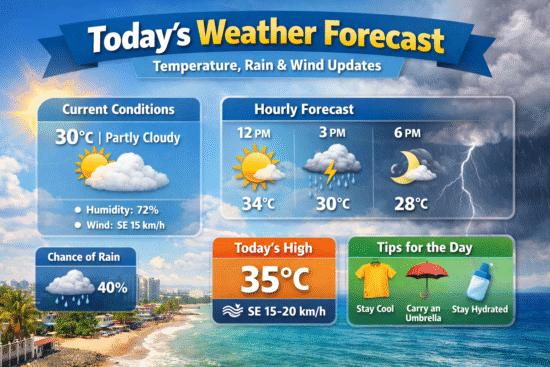
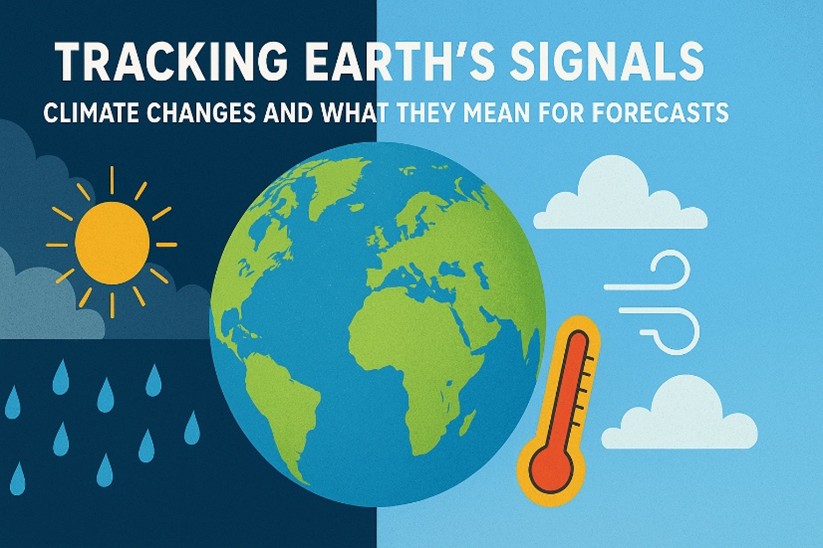
Understanding the planet’s Climate Changes is no longer a topic for scientists alone—it’s becoming essential knowledge for everyone who relies on accurate weather updates to plan daily life. Whether we’re checking the current weather, preparing a trip, or depending on a weather forecast for our job, climate signals quietly shape the reliability of everything we look at.
As global temperatures rise and climate patterns intensify, the Earth is sending strong signals. These signals tell us how our atmosphere is changing and how those changes influence the weather we experience today—and the weather we can expect in the future. In this blog, we explore what these climate signals are, how they work, and why understanding them helps create more accurate weather forecasting systems worldwide.
What Are Global Climate Signals?
Global climate signals are patterns, trends, and indicators that reflect long-term changes in the Earth’s climate system. These signals come from land, oceans, ice sheets, and even the atmosphere. They influence the weather we experience on a day-to-day basis.
Some important global climate signals include:
- Rising global temperatures
- Melting glaciers and polar ice caps
- Shifts in monsoon and rainfall cycles
- Increased frequency of heatwaves
- Ocean warming and acidification
- Changes in jet streams and trade winds
- El Niño and La Niña cycles
Each of these signals directly affects the current weather and the accuracy of every weather forecast.
The Difference Between Weather and Climate
To understand climate signals, it’s important to differentiate between weather and climate:
- Weather is what you experience today or this week—temperature, rainfall, humidity, wind, storms, etc.
- Climate is the long-term pattern of weather over decades or centuries.
In simpler terms:
Weather is your daily outfit. Climate is your wardrobe.
Climate signals don’t predict if it will rain tomorrow, but they influence how much rain a region typically gets—and help meteorologists produce more accurate weather predictions over time.
How Global Climate Signals Influence Current Weather
Climate signals act like background forces that shape everyday weather. Here’s how they connect:
- Changing Temperature Patterns
Rising temperatures lead to:
- Hotter summers
- Warmer winters
- Increased evaporation
This affects current weather by increasing the likelihood of heatwaves, warm nights, and extreme humidity levels.
- Sea-Level Rise
When sea levels rise due to melting ice caps, it affects local weather patterns:
- Coastal flooding
- Changes in wind circulation
- Higher chances of storm surges during cyclones
This makes weather forecast models more complex and forces meteorologists to adjust parameters for coastal regions.
- Ocean Warming
Oceans act as Earth’s climate engine. When oceans warm:
- Tropical storms grow stronger
- Monsoon timings shift
- Rainfall intensity increases
This can affect the accuracy of weather forecasts, especially for regions dependent on seasonal rains like South Asia.
- Jet Stream Shifts
Jet streams are fast-moving air currents that influence storm tracks and temperature patterns.
Climate change weakens and destabilizes these streams, causing:
- Longer heatwaves
- Unexpected cold spells
- Unpredictable rainfall
As a result, predicting the current weather becomes more difficult without advanced models.
Climate Signals You Should Know
Let’s explore some major climate signals shaping the planet today.
- El Niño
El Niño warms the Pacific Ocean, causing:
- Drier weather in Australia and Southeast Asia
- Wetter conditions in South America
- Warmer global temperatures
During El Niño years, weather forecasts often highlight extreme rainfall in some regions and severe droughts in others.
- La Niña
La Niña is the opposite:
- Cooler Pacific waters
- Stronger monsoons
- Increased cyclone activity
This directly impacts the current weather in tropical regions.
- Arctic Ice Melt
The Arctic is warming at twice the global rate.
This has consequences:
- Weakened jet streams
- Increased cold waves
- More unpredictable storms
Meteorologists incorporate polar data daily to generate accurate weather predictions.
- Heat Dome Events
A heat dome traps hot air over a region for days.
This leads to:
- Extreme heatwaves
- Record-breaking temperatures
- Long-term droughts
Weather models track these heat domes carefully to improve weather forecasting accuracy.
Why Accurate Weather Forecasting Is Becoming More Challenging
Climate change introduces more volatility into the atmosphere, making traditional forecasting harder.
Here’s why:
- Sudden Weather Extremes
Weather patterns change faster than before. A region could experience:
- A heatwave
- Sudden rainfall
- High winds
All within 48 hours, complicating current weather predictions.
- Increased Moisture in the Atmosphere
More moisture means more intense and unpredictable:
- Rainfall
- Thunderstorms
- Snowstorms
Satellite systems work constantly to balance these variables for an accurate weather outlook.
- Changing Monsoon Patterns
Regions like India rely heavily on monsoon forecasts.
Climate signals cause:
- Delayed monsoons
- Shorter monsoons
- Heavier bursts of rain
This affects food supply, agriculture, and water resources.
- Rapid Ocean Changes
Since oceans absorb most of the planet’s heat, rapid warming directly impacts:
- Cyclone formation
- Storm intensity
- Coastal rainfall patterns
Forecasters use advanced ocean data to refine weather forecasts.
How Technology Improves Weather Forecast Accuracy
Despite climate challenges, technological advancements have made weather predictions more reliable.
- Supercomputers
Modern forecasting models use supercomputers to simulate:
- Atmospheric pressure
- Temperature
- Wind patterns
- Ocean currents
These simulations generate more accurate weather predictions.
- Satellite Imagery
Satellites monitor:
- Cloud movement
- Storm formation
- Changes in ice cover
This real-time data enhances current weather analysis.
- AI and Machine Learning
AI helps:
- Detect patterns
- Predict storm intensity
- Improve rainfall accuracy
Many weather agencies now use AI to update weather forecasts every hour.
What Climate Signals Mean for Future Weather Forecasting
As climate signals grow stronger, forecasting systems are adapting in several ways:
- More Localized Forecasts
Instead of predicting weather for large regions, future forecasts will provide hyperlocal insights:
- Street-level rainfall predictions
- Neighborhood temperature readings
- Hour-by-hour alerts
This will make current weather updates highly relevant for everyday life.
- Early Warning Systems
Advanced climate-tracking tools will help:
- Predict cyclones earlier
- Warn about heatwaves days ahead
- Reduce the impact of floods
This makes weather forecasts more life-saving than ever.
- Seasonal Climate Outlooks
Forecasts won’t just be hourly—they will be:
- Weekly
- Monthly
- Seasonal
These long-term forecasts help farmers, travelers, and policymakers plan better.
How You Can Use Weather Forecasts Effectively
Here are simple ways to make the most of your weather forecast:
- Check trusted weather apps daily
- Look at humidity and wind speed, not just temperature
- Track severe weather alerts during monsoon or winter
- Follow local news for regional climate updates
- Plan outdoor activities using hourly forecasts
Staying updated on the current weather helps you avoid disruptions and remain prepared.
Conclusion: Reading Earth’s Climate Signals for a Safer Future
The world is changing rapidly, and the Earth continues to send signals—rising temperatures, shifting rainfall, warming oceans, and melting ice. These signals shape everything from today’s current weather to the long-term climate outlook.
Understanding these patterns helps scientists build better forecasting models, communities prepare for extreme events, and individuals trust more accurate weather information. As forecasting technology evolves, our ability to adapt to climate change becomes stronger.
The more we track Earth’s signals, the better we can predict—and prepare for—the storms, sunshine, heatwaves, and rainfall of tomorrow.